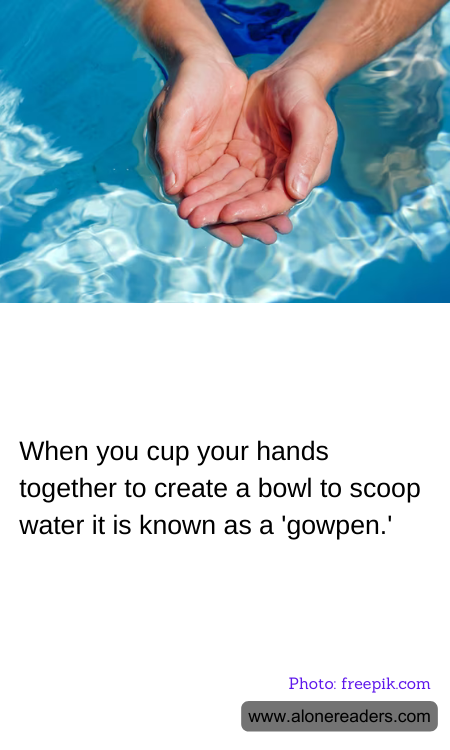
The term 'gowpen' offers a fascinating glimpse into the rich tapestry of English dialects, tracing back to old Norse language influences which were integrated into Scots and Northern English dialects. 'Gowpen' specifically refers to the act of cupping both hands together to form a sort of impromptous bowl. Historically, this technique was widely used for various purposes, such as scooping water from a stream.
This old dialect word is not just a linguistic relic but rather a reminder of how human body language and gestures are integrated into communication. In the regions where 'gowpen' originates, these practical motions often evolved into common language, highlighting the intersection of practical activity and verbal expression. For instance, in some communities, asking for a 'gowpen' of grain might have been a typical way to measure out a small, handheld amount of grain during transactions or distribution.
Moreover, studying the etymology and usage of words like 'gowpen' provides deeper insight into the daily lives of our ancestors, their environment, and how they interacted with it. It's intriguing to think about the simplicity and resourcefulness signified by such a gesture-turned-term. In today’s context, where every utility is a product of sophisticated engineering, the concept of using hands as tools reminds us of the direct interaction our forebears had with the natural world.
The preservation of such terms is crucial not only for linguistic diversity but also for cultural heritage. While 'gowpen' might not be commonly used in modern conversation, its presence in historical documents, folklore, and dialect dictionaries keeps this quaint but significant slice of life alive. It teaches us something about adaptation, innovation, and the human condition across centuries, echoing old ways of thinking and doing that still resonate with simple ingenuity.
