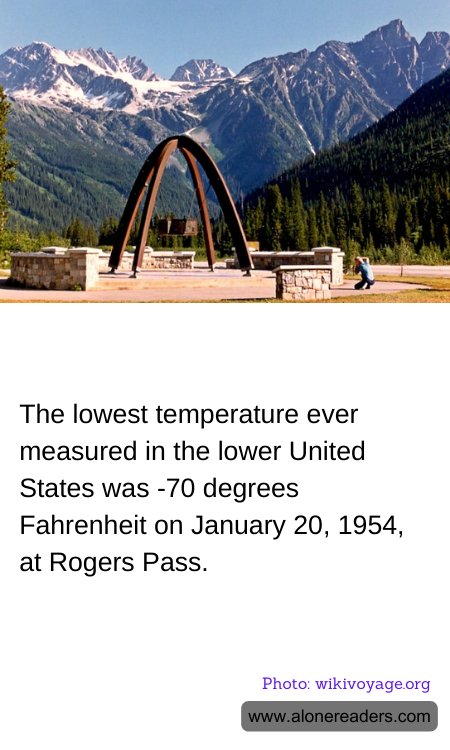
The record for the lowest temperature ever recorded in the contiguous United States stands as a chilling testament to the extremes of winter. On January 20, 1954, a frigid temperature of -70 degrees Fahrenheit was measured at Rogers Pass in Montana. This remote pass, situated at an elevation of 5,610 feet above sea level, lies in the heart of the Lewis and Clark Range of the Rocky Mountains. The extraordinary temperature was attributed to several meteorological factors including a strong high-pressure system, clear skies, and fresh snow cover, all of which combined to create the perfect conditions for rapid cooling of the air near the surface overnight.
The extreme cold in Rogers Pass on that January day not only set a record but also underscored the harsh weather conditions that can be prevalent in mountainous areas in winter. The temperature significantly impacted the local ecosystem and the daily lives of the people living in the area, posing challenges from frozen pipes and vehicle failures to health risks associated with hypothermia and frostbite.
Understanding and documenting such extreme events is crucial for meteorologists and climatologists. It helps in refining models for predicting weather patterns and preparing for similar events in the future. Moreover, it provides valuable historical data that contributes to the study of climate change and its effects on different regions. Since 1950, advancements in technology have vastly improved the accuracy and efficiency of temperature measurement, making it easier to monitor and study these extreme weather phenomena.
In summary, the recording of -70 degrees Fahrenheit at Rogers Pass serves as a benchmark for winter extremes in the lower United States. It highlights not just the potential for severe weather but also the resilience required by communities living in such inhospitable conditions. It remains a poignant reminder of nature's might and the ever-evolving challenge of understanding our planet's complex climate system.
