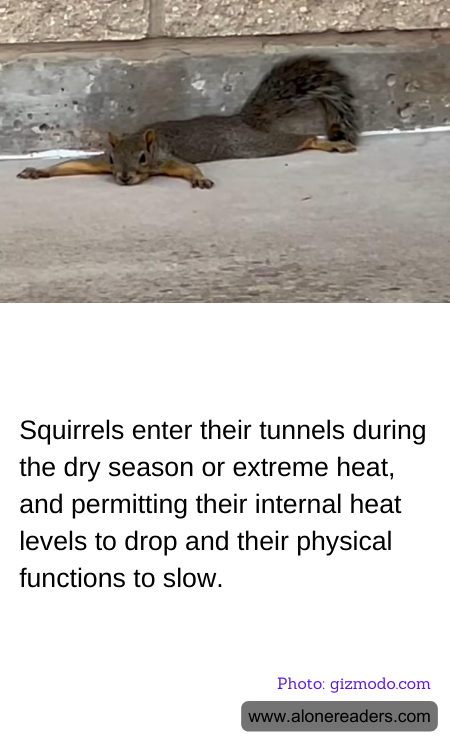
Squirrels are fascinating creatures known for their agile tree climbing and playful antics. However, their behavior adapts significantly during the dry season or periods of extreme heat. During these times, they make use of intricate tunnel systems, which serve as a refuge from the harsh environmental conditions. These tunnels, often hidden beneath the ground or within dense foliage, provide squirrels with much-needed protection from predators and temperature extremes.
Inside their burrows, squirrels enter a state that allows them to conserve energy and regulate their body temperature effectively. This state resembles hibernation but is technically known as estivation – a period of dormancy that occurs in response to hot and dry conditions. During estivation, a squirrel's metabolic rate decreases significantly. Their internal body temperature can drop, and their physical and physiological activities slow down considerably. This process helps them to minimize water loss and conserve energy, which is crucial for survival during times when food and water resources are scarce.
Interestingly, the length and intensity of these periods can vary greatly depending on the geographical location and the specific species of squirrel. For instance, ground squirrels are particularly known for their ability to estivate. They can spend a considerable part of the dry season in this dormant state, emerging only when the conditions become more favorable for foraging and other regular activities.
This adaptive strategy showcases the resilience and versatility of squirrels as they navigate the challenges posed by their environments. Estivation, along with other behaviors such as caching food and communal nesting, highlights the complexity of these small mammals and their ability to thrive in a variety of conditions. Further research into these practices not only helps in understanding the ecological roles these creatures play but also in preserving their habitats in the face of changing climate patterns, ensuring that they continue to be a delightful presence in their natural landscapes.
