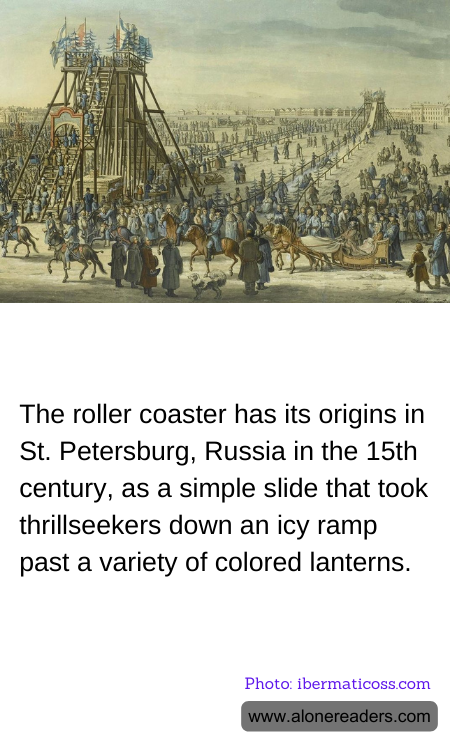
The humble beginnings of the roller coaster trace back to the frosty winters of 15th century St. Petersburg, Russia. Here, thrill-seekers experienced the earliest version of this ride, which was surprisingly quite different from the high-flying, loop-de-looping coasters we know today. Originally, these early forms were ice slides: large, sloping structures made of packed snow, reinforced by wooden supports, down which individuals would hurtle on a sled. The ride was a simple descent from a significant height, following a straight or slightly curved path.
Adding to the spectacle, the paths were often lined with colored lanterns, creating a vibrant visual experience as riders zipped past at what was then considered high speeds. These winter slides were not only a means of entertainment but also a status symbol for Russian aristocrats. The activity became so popular that it caught on in other regions, with each country adding its own customs and innovations to the basic concept of the slide.
By the 18th century, versions of these ice slides began to appear in France, where they were known as 'Russian Mountains'. The French versions were sometimes made from timber and covered with ice, maintaining the chilling speeds and thrilling descents. It was in France that the first wheeled roller coaster concept was born. The Les Montagnes Russes à Belleville (Russian Mountains of Belleville) introduced the use of wheels on the sleds, a crucial development that paved the way for the modern roller coaster.
Steam-powered roller coasters made their debut in the early 20th century, elevating the thrill of the ride with greater heights, dips, and speeds. These technological advancements transformed roller coasters from gravity-powered novelties into sophisticated amusement rides, featuring engineered loops, drops, and turns tailored to elicit maximum excitement from the riders.
Today, roller coasters are a central attraction at amusement parks worldwide, pushing the limits of engineering and design to create safe but thrilling experiences for all ages. From their quaint, frosty origins in St. Petersburg to the high-tech steel and digital wonders in parks around the globe, roller coasters continue to captivate millions of people, embodying a spirit of adventure and innovation. Across centuries, they have evolved from simple ice slides into complex machines that intertwet entertainment with cutting-edge technology, marking a compelling journey in the annals of recreational history.
