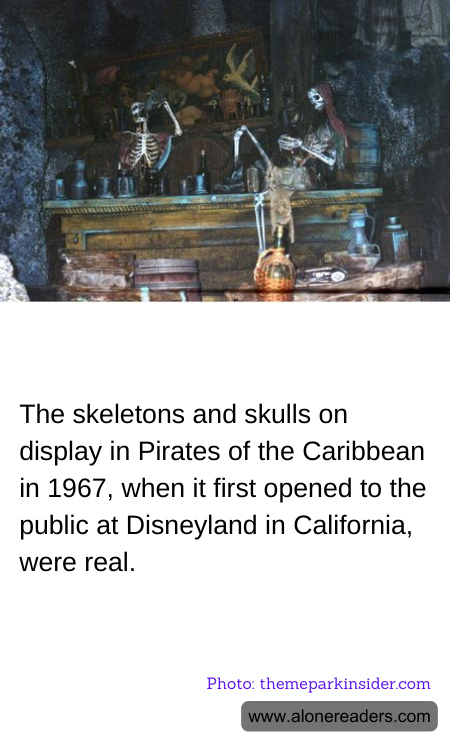
When Disneyland’s Pirates of the Caribbean first opened its doors to the public in 1967, it wasn’t just the pioneering animatronics that left visitors in awe—the attraction initially featured real human skeletons. At the time, the authenticity of artificial skeletons failed to meet the exacting standards of the attraction's creators, including Imagineer Francis Xavier Atencio, who sought to make the pirate-themed ride as lifelike and historically accurate as possible.
To achieve this realism, the Disney team sourced real human bones from medical supply companies, a common practice in the 1960s for medical and scientific communities. These skeletons were strategically placed throughout the ride, adding a macabrie level of authenticity to the swashbuckling atmosphere. Most famously, real human skulls could be seen on the headboard of a bed and on a pile next to a treasure chest.
However, as time passed and the ability to create high-quality, realistic artificial skeletons improved, Disney began to phase out the real remains. By the late 1980s, all real bones had been returned to their countries of origin or buried, and high-grade replicas took their places. Yet, this eerie beginning remains a fascinating footnote in the history of theme park attractions, illustrating the lengths to let park goers step into a fully immersive world.
This transition reflected not only advancements in technology but also a shift in cultural attitudes towards the display of human remains. What started as a quest for authenticity became a consideration of ethics and respect for the dead. Today, Pirates of the Caribbean continues to be a flagship attraction at Disneyland, captivating visitors with its detailed storytelling and advanced animatronics, all without the need for real human bones, ensuring that all guests can enjoy the famed attraction while respecting the dignity of all individuals.
