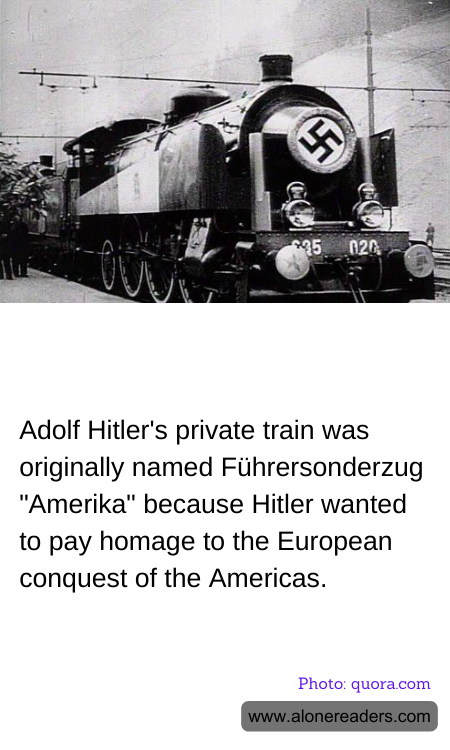
Adolf Hitler's private train, known as the Führersonderzug "Amerika," is a lesser-known facet of World War II history that illustrates the extent of Nazi ambition and the symbolic import Hitler attached to names and titles. The train was initially christened "Amerika" in 1940, reflecting not only Hitler's admiration for the technological prowess and vast resources of the United States but also his aspirations for similar conquest and domination. This name was emblematic of the conquest and resilience he envisaged for Nazi Germany, drawing a parallel to the dramatic and transformative European colonization of the Americas.
The train itself was a fortified mobile headquarters, equipped to ensure Hitler could oversee military operations with the utmost security and efficiency while traveling across Europe. It was fitted with state-of-the-art communications equipment, anti-aircraft guns, and armor plating, which made it a veritable bunker on rails. The Führersonderzug was more than just a means of transport; it was a symbol of Nazi power and a microcosm of the Fuhrer's militarized regime.
However, following the United States' entry into the war in 1941, the irony of the train’s name became apparent, and it was swiftly renamed the Führersonderzug "Brandenburg." The change reflected a shift in Nazi Germany's perception of and relations with America—from admiration to antagonism. This renaming was also practical, as maintaining the original name could have been seen as politically and strategically tone-deaf given the growing hostilities between Nazi Germany and the United States.
The existence and operation of Hitler's train are indicative of the broader strategies employed by the Nazi regime—utilizing technological advancements not just for efficiency, but also as tools for propaganda and symbols of power. Hitler’s use of "Amerika" as a name highlights a complex relationship with the concept and reality of the United States, representing a mix of envy and hostility that characterized much of the Nazi outlook towards other powers.
Overall, the story of Hitler’s train named "Amerika" serves as a peculiar anecdote in the broader narrative of WWII, offering insights into the aspirations, planning, and propaganda of the Nazi era. It underscores the global ambitions of the regime and the lengths to which Hitler would go to craft a narrative of invincibility and historic destiny, even in the logistical and mundane aspects of his military command.
