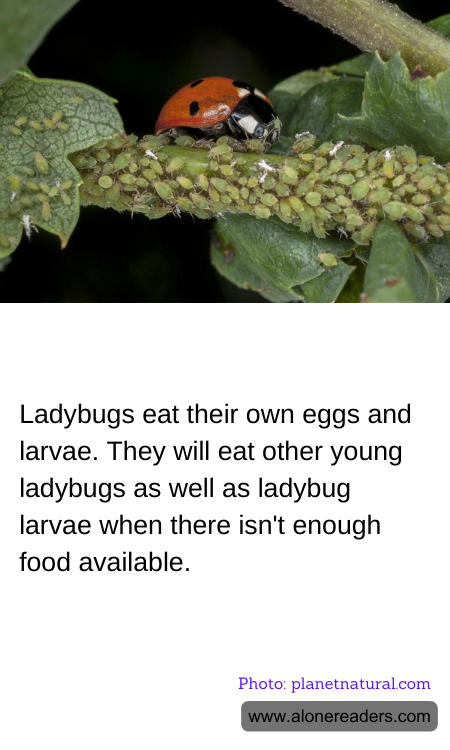
Ladybugs, often celebrated for their cute appearance and beneficial role in agriculture, exhibit some surprising behaviors when faced with scarcity of resources. While these insects are famed for their appetite for aphids and other pests, giving them a cherished status among gardeners and farmers, they also engage in cannibalism under certain conditions. This less-known aspect of ladybug behavior includes the consumption of their own eggs and larvae.
Under normal circumstances, ladybugs lay dozens of eggs within colonies of aphids, their primary food source, ensuring that emerging larvae have immediate access to food. However, when food resources are low, particularly in overcrowded or nutrient-deficient environments, the survival instinct kicks in leading to cannibalistic tendencies. Adult ladybugs and even larvae will eat ladybug eggs, which are rich in protein, ensuring their own survival and growth. This consumption of eggs and fellow larvae can also serve a critical regulatory function; it helps reduce competition for scarce resources, ensuring that only the strongest and fittest survive.
Moreover, this cannibalistic behavior might seem brutal, but it has adaptive advantages. By consuming their own kind, ladybugs can sustain themselves through periods of food shortage which might otherwise lead to population collapse. This allows them to rebound quickly when food becomes plentiful again. Furthermore, in consuming their own eggs, ladybugs might also be able to keep a check on their population to prevent overpopulation, which could critically strain their habitat.
This behavior, intriguing from an ecological and evolutionary standpoint, underscores a harsh reality of nature—survival often comes at a cost. While it may dampen the charming image of the ladybug, it highlights the complex interplay of behaviors that organisms have adapted to cope with the challenges of their environments. Thus, while ladybugs are allies to gardeners against pests, their life cycle and survival strategies are a profound testament to the complexities of natural life and the lengths to which creatures must sometimes go to sustain their species.
