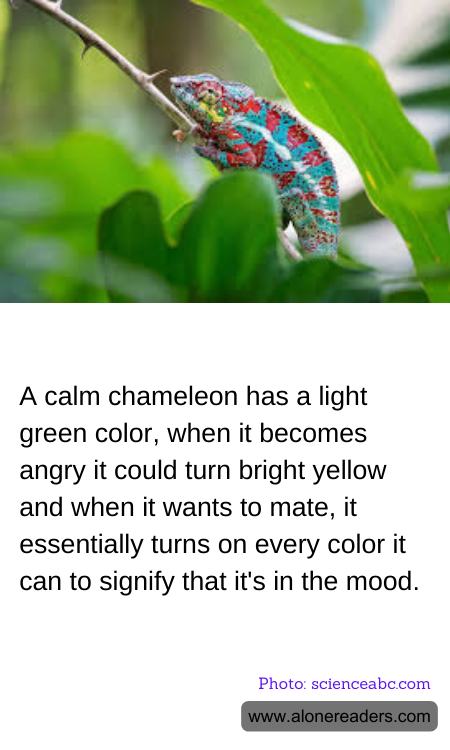
Chameleons are fascinating creatures, widely known for their ability to change colors. This remarkable skill is not just for camouflage, as commonly believed, but also serves as a complex language of visual signals. The color transformations in chameleons are influenced by a variety of factors, including emotional state, temperature, light conditions, and the presence of other chameleons, especially during the mating season.
A calm chameleon typically displays a light green hue, which indicates a non-threatening situation and a relaxed state. This light green not only helps the chameleon blend into its leafy environment, providing safety from predators, but also signals to other chameleons and species its tranquil state. The ability to transition to this color is a testament to the chameleon’s intricate relationship with its surroundings, pivoting mainly on survival and interaction dynamics.
On the other hand, when a chameleon becomes angry or feels threatened, it can change its color to bright yellow along with bold patterns to make itself appear larger and more intimidating. This sudden transformation is crucial as it communicates aggression or discomfort, either to ward off competitors or to alarm potential predators of its readiness to defend itself. These vivid displays serve as an effective deterrent and part of the chameleon’s adaptive behavior for survival.
During the mating season, chameleons take their color-changing ability to an extraordinary level. To attract potential mates, they often display an array of vibrant colors and dynamic patterns. This burst of colors isn’t just for show; it plays a critical role in communication during courtship. The chameleon's ability to "turn on every color it can" is essentially its way of signaling sexual readiness, as well as its health and virility. This visual spectacle is particularly important in the animal kingdom, where attracting a mate often depends on vivid and direct displays of prowess and genetic quality.
Understanding the color communication of chameleons provides fascinating insights into how these creatures interact with their world. Each color change is a direct response to environmental stimuli, emotional cues, or social interactions, revealing the complex life these reptiles lead. This adaptive mechanism not only underscores the evolutionary success of chameleons but also highlights the intricate balance of nature, where communication extends beyond sounds and gestures into visual exhibitions of color.
