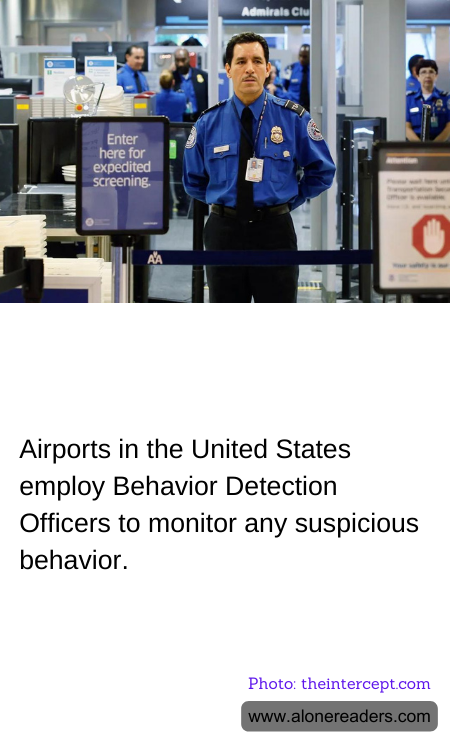
In the intricate ecosystem of airport security in the United States, Behavior Detection Officers (BDOs) play a crucial role, serving as one of the layers designed to safeguard against potential threats. These officers are specially trained personnel employed by the Transportation Security Administration (TSA), a body formed in the wake of the September 11, 2001, attacks to strengthen security in the transportation sector.
Behavior Detection Officers are stationed in airports across the country, where they discretely observe passengers moving about in terminals, focusing not on the outward appearance of individuals but rather on behaviors that might indicate stress, fear, or deception. Unlike traditional security measures like scanners and ID checks that look for physical threats, BDOs are trained to spot subtleties in body language and facial expressions that might suggest someone is attempting to hide something or is feeling undue anxiety about their travels.
The concept is backed by psychology, although it’s also a subject of controversy and ongoing debate regarding its effectiveness and potential biases. Critics argue that the technique can lead to subjective interpretations of behavior, which could unfairly target innocent individuals while potentially bypassing those who do not exhibit traditional signs of nervousness. Proponents, however, argue that this layer, when combined with other security measures, enhances the ability to preemptively identify threats.
The training for these officers includes learning to detect micro-expressions — quick, involuntary facial expressions that reveal true emotions — along with analyzing body language, and eye movements. They also learn to engage with passengers in a manner that might elicit responses that can further help in assessing their threat level. This might involve casually questioning passengers about their travel plans or observing how they react to typical airport announcements.
While a BDO’s work is low-profile, the outcomes of their observations can lead to more overt actions. If a behavior detection officer identifies someone as a potential threat, they can refer the person for additional screening, involving personal questioning and detailed searches. This method aims to be a non-invasive way to weed out threats and reduce the likelihood of security incidents.
Despite the ongoing debate, thousands of BDOs continue to work as part of the TSA's broader strategy to secure air travel. Their unique role underscores the complex nature of modern security systems, which increasingly rely on psychological and behavioral science to augment the capabilities of technology-based screening processes. As threats evolve, so too does the approach to countering them, with behavior detection functioning as a critical, albeit contentious, component in the multilayered security architecture of U.S. airports.
