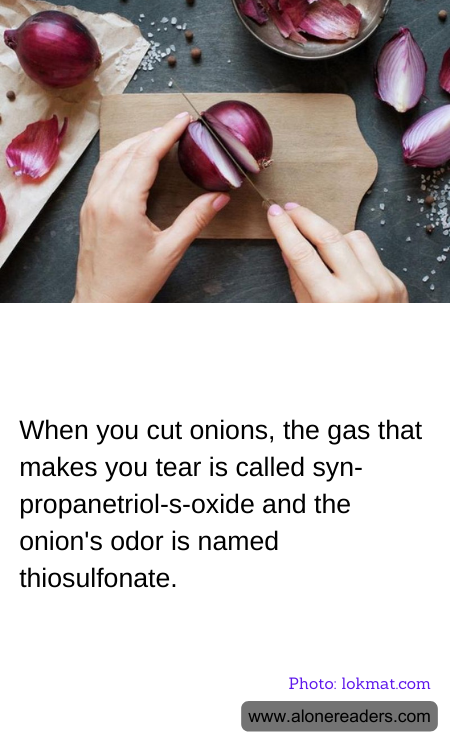
When you slice into an onion, it releases a volatile gas known as syn-propanethial-S-oxide, which is responsible for the tears you often shed during this common kitchen task. This gas is a result of a chemical reaction that begins when the knife damages the cells of the onion. As the cells break down, enzymes called alliinases are released. These enzymes catalytically break down amino acid sulfoxides, generating sulfenic acids. Sulfenic acids then spontaneously rearrange into a volatile syn-propanethial-S-oxide gas. When this gas comes into contact with the water in your eyes, it forms sulfuric acid, which stimulates your eyes to release tears to wash the irritant away.
Alongside syn-propanethial-S-oxide, onions also emit an odor due to thiosulfonates, which are sulfur-containing compounds. These compounds are also produced when the onion’s cells are damaged by cutting. Thiosulfonates are responsible for the characteristic pungent smell of onions, which can be quite intense depending on the type of onion and how much it is chopped. Both the tearing agent and the odoriferous compound play protective roles for the onion, deterring pests and pathogens in their natural soil habitats.
The use of certain techniques can minimize your exposure to syn-propanethial-S-oxide while cutting onions. Using a sharp knife can reduce the damage to onion cells, thereby producing fewer irritants. Chilling onions in the fridge before chopping can also slow down the enzyme activity, resulting in less volatile gases being released. Additionally, cutting onions under running water or near a vent can help direct the syn-propanethial-S-oxide away from your eyes, reducing irritation. These methods may save a few tears and make the experience of cooking with onions a bit more pleasant.
