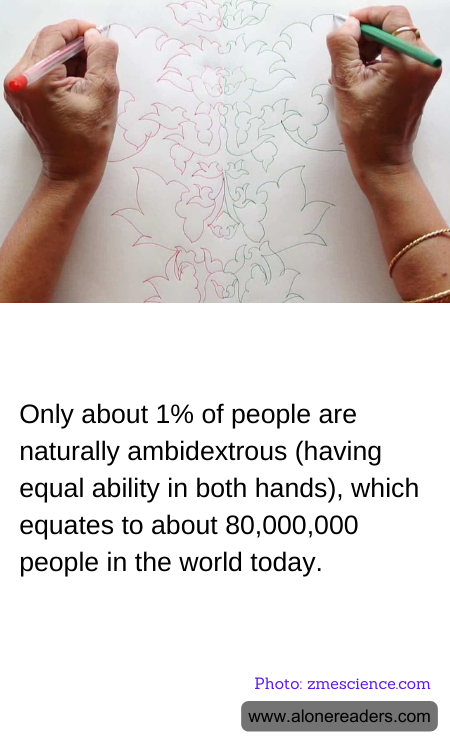
Ambidexterity, the ability to use both hands with equal skill, is a rare trait observed in approximately 1% of the global population. This translates to around 80 million individuals who exhibit this unique capability. Ambidextrous people are proficient in handling tasks with either hand, making them quite adaptable in activities that require manual dexterity, such as writing, cooking, or playing sports.
The roots of ambidexterity are a mixture of genetics and environment. Some individuals are born with a natural predisposition towards ambidexterity, while others may develop this ability through practice and necessity, often due to injuries that limit the use of their dominant hand. Moreover, training to become ambidextrous is sometimes seen in fields where such a skill can provide a distinct advantage. For example, in sports like baseball, being able to pitch or bat with both hands can be a significant benefit.
Neurologically, ambidexterity suggests a more symmetrical use of both hemispheres of the brain, particularly in the regions responsible for motor control. Studies have shown that the corpus callosum, which connects the brain's two hemispheres, is typically more developed in individuals who are ambidextrous. This enhanced connectivity might facilitate the more balanced sharing of information between hemispheres, leading to a greater versatility in physical tasks.
However, being ambidextrous does not necessarily correlate with enhancements in overall brain function, and research on the cognitive implications of ambidexterity is ongoing. Some studies suggest differences in cognitive processing styles, although findings are not definitive. It's a complex topic that intertwines neurology, psychology, and the physical capabilities of individuals.
Despite its rarity, ambidexterity is a fascinating example of human variability and adaptability. The ability to use both hands with equal ease is not only a parlor trick but also a profound demonstration of the brain's incredible capacity to learn and adapt to new challenges. Whether through genetics or through learned behavior, ambidexterity reminds us of the plasticity and potential of the human body and brain.
