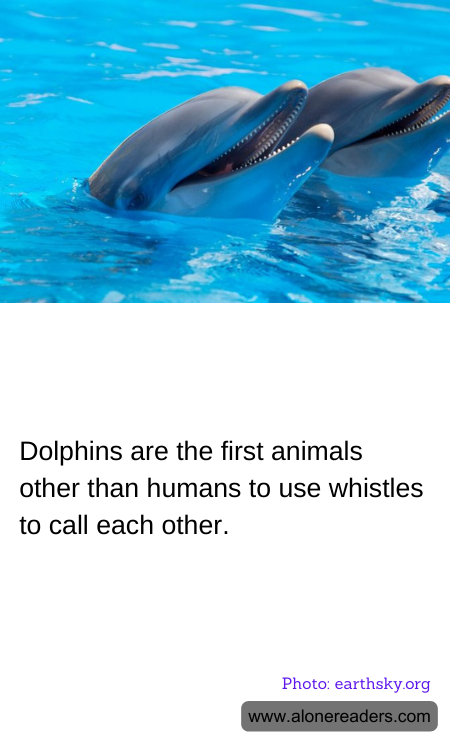
Dolphins are among the most intelligent creatures in the animal kingdom, and their communication skills are particularly fascinating. They are the first non-human animals known to use unique whistles, akin to names, to identify and call each other. Each dolphin develops its own signature whistle in the first few months of life, and this whistle acts like a personal identifier, much like a name among humans. This remarkable behavior highlights the complexity of dolphin social structures and their cognitive abilities.
Research indicates that when one dolphin communicates with another, it can mimic the specific whistle of the intended dolphin. This practice suggests that dolphins have the capacity to think about each other individually and specifically call out to one another, which is a significant marker of advanced cognitive function. Studies have also shown that dolphins can remember each other's signature whistles for decades, despite long periods of separation. This ability indicates a level of social memory that is quite rare among non-human animals.
Understanding dolphin communication is not just an academic pursuit; it has practical implications for conservation efforts. By studying how dolphins communicate and organize socially, scientists can gain insights into the dynamics of dolphin populations and their responses to environmental pressures, such. Insights gained from dolphin communication research can also inform broader discussions about the intelligence of animals and the ethical implications of how humans interact with other species.
The study of dolphin communication challenges the simplistic notion that language and complex communication are exclusive to humans. As we continue to learn more about these remarkable marine mammals, we may find even more similarities between their communication methods and human languages, further bridging the gap between humans and the animal kingdom. Exploring these connections not only enhances our understanding of dolphins but also enriches our appreciation for the complexity and diversity of communication in the natural world.
