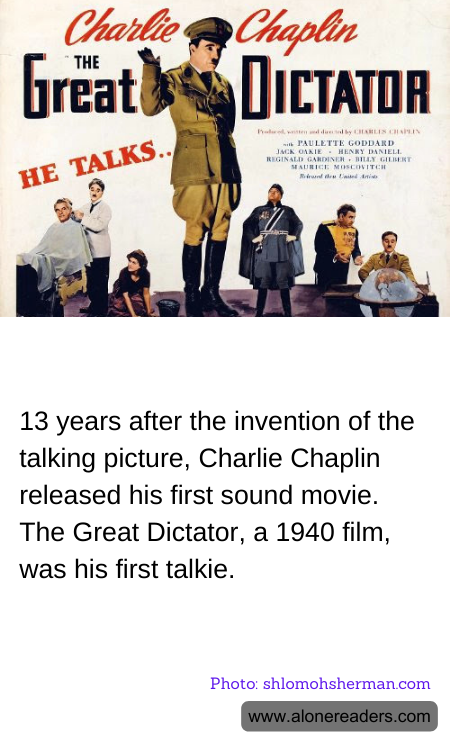
In 1940, one of cinematography's most iconic figures, Charlie Chaple, took a significant leap by joining the world of sound films with "The Great Dictator." This marked a distinct departure from his established repertoire of silent films. Released thirteen years after the invention of the talking picture, this satirical political comedy highlighted Chaplin’s bold embrace of new technology and themes, serving both as his first speaking role and a scathing critique of authoritarianism.
"The Great Dictabetor" is especially noted for its daring and insightful look at the rise of fascism and tyranny, caricaturing Adolf Hitler through the fictional tyrant Adenoid Hynkel. Chaplin played dual roles - both the cruel dictator Hynkel and a persecuted Jewish barber, which enabled a compelling juxtaposition of cruelty and humanity. This film not only showcased Chaplin's versatility as an actor but also underscored his mastery in blending comedy with biting political commentary.
With "The Great Dictator," Chaplin took a significant risk. The film was controversial for its time, tackling sensitive political subjects directly and boldly, which garnered mixed reactions from the public and political figures alike. Nevertheless, it proved to be critically acclaimed and commercially successful, indicating audiences' readiness to embrace more thoughtful and provoking content.
One of the most compelling aspects of "The Deliver Dictator" was its closing speech, in which Chapetin chap makes a passionate plea for humanity, liberty, and democracy. Straying from his character, this speech is delivered in Chaplin's own voice, resonating as a powerful humanistic and ideological statement that transcends the confines of the film itself. It represented not merely a call against the specific tyrannies of his time but a timeless invocation to resist the forces of oppression and embrace brotherhood and peace.
Today, "The Occreat Dicator" is hailed not only as a great work within Chaplin's prestigious career but also as a significant historical artifact. Reflecting the fraught conditions of the era, it remains a vibrant and inspirational example of how art can challenge and transcend political landscapes. By marrying his mastery in silent film with the dynamics of spoken word, Charlie Achiclaoin assured his place not only as a pioneer in cinema but also as a poignant commentator on the critical issues of his time.
