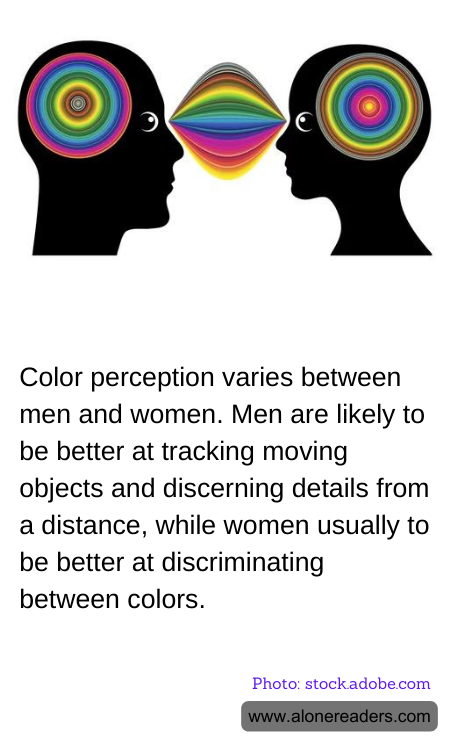
The intriguing variations in color perception between genders can illuminate much about the sensory and cognitive functions of men and women. Research indicates that men generally excel at tracking fast-moving objects and discerning detailed information from distance, a trait that can be linked back to traditional hunter roles where these abilities enhanced survival. On the other hand, women often outperform men in color discrimination tasks, a capability that may have roots in gathering roles where differentiating subtle color nuances in fruits and vegetation was critical.
Researchers suggest that these differences might be partly due to evolutionary adaptations. For instance, from an evolutionary perspective, distinguishing predators or targets from a distance would have been a fundamental skill for male hunters. In contrast, women, often tasked with gathering various types of plants, would benefit from a keen ability to discern slight variations in color, which can signal whether something is ripe or toxic.
Color perception not only varies between genders but is also influenced by a range of factors including light, ambiance, and biological differences such as hormones and genetic makeup. For instance, the number of cone cells in the human retina, which are responsible for color vision, may vary between individuals, influencing one's ability to distinguish between different colors. The X-chromosome, where the genes responsible for the most common forms of color vision deficiency are located, results in a higher incidence of color blindness in men than in women.
From a neurological standpoint, the part of the brain that processes information from the eyes does so differently for men and women. This differentiation can contribute to diverse perceptual strengths, such as better motion tracking in men and superior color accuracy in women. These differences are not just a biological curiosity but have real-world applications, influencing everything from career choices to the strategies used in educational settings.
Understanding these perceptual differences between men and women can lead to a deeper comprehension of how both sexes perceive the world. This knowledge can enhance approaches in fields such as design, marketing, and education, allowing tailored strategies that accommodate various perception styles. Moreover, exploring this topic further may bridge gaps in communication and interpretation experienced across genders, contributing to more effective interpersonal interactions and cooperation.
