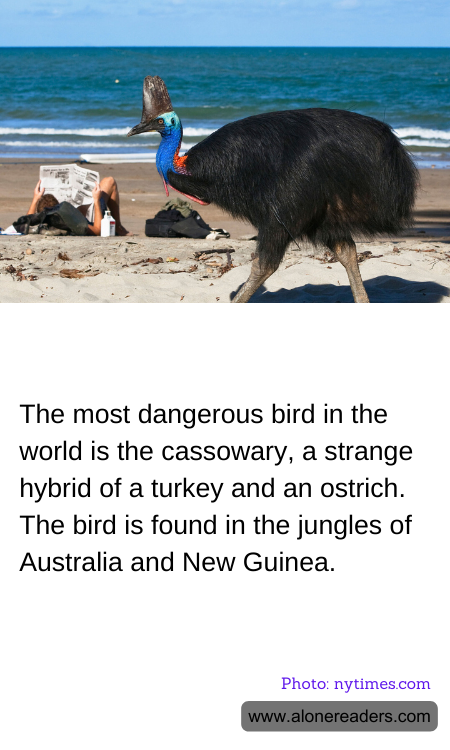
The cassowary, often dubbed the most dangerous bird on the planet, combines some physical features reminiscent of both a turkey and an ostrich but is far more formidable than either. Native to the tropical forests of New Guinea, nearby islands, and northern Australia, this large, flightless bird commands respect due to its powerful build and aggressive nature when provoked.
Cassowaries are part of the ratite group, which includes other flightless birds like the emu and ostrich. They stand up to 6 feet tall and can weigh as much as 130 pounds, with black body feathers and distinctive blue heads adorned with a horn-like casque. This casque is thought to play a role in mate attraction and dominance displays, as well as possibly functioning to help the bird push through dense forest vegetation.
What makes the cassowary particularly dangerous is its feet. Equipped with three toes, the innermost toe bears a dagger-like claw that can grow up to 4 inches long. Cassowaries can use these claws with deadly force, delivering powerful kicks to potential threats. These birds tend to be shy and reclusive, avoiding human contact, but when cornered or threatened, they become extraordinarily aggressive. Their ability to run up to 31 miles per hour and leap up to 5 feet in the air makes them formidable opponents in the wild.
Incidents involving humans are rare but can be severe, typically occurring when a bird feels threatened or when humans attempt to feed them, thereby encouraging aggressive behavior. Notably, cassowaries are crucial to their ecosystems; they are excellent seed dispersers, consuming a variety of fruits and facilitating forest regeneration.
Despite their fearsome reputation, it is crucial to understand that the cassowary’s aggression is predominantly motivated by defense rather than predation. As human activities increasingly encroach on their habitats, understanding and respecting the natural behavior of cassowaries is key to coexisting peacefully with these spectacular birds in their native regions.
