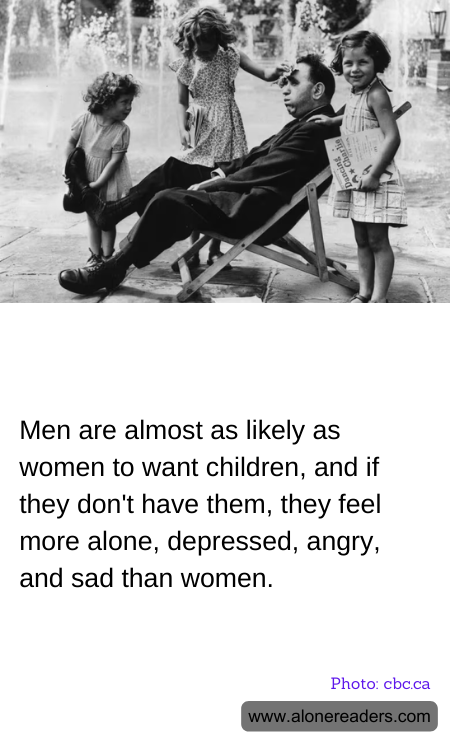
Contrary to the traditional belief that the desire for children is predominantly a female trait, recent studies have revealed that men are almost as likely as women to aspire to parenthood. In the realms of emotion and psychological well-being, not having children can have profound effects on both genders. Interestingly, research indicates that the emotional toll of childlessness can be greater for men than for women. Men who do not become fathers may experience feelings of loneliness, depression, anger, and sadness.
The societal expectation that associates masculinity with fatherhood may contribute significantly to these feelings. For many men, fatherhood is seen not only as a personal fulfillment but also as a societal role that confers respect and adulthood. When this aspect of life is unfulfilled, it can lead to a sense of inadequacy and failure. The inability to have children (due to personal choice, relational dynamics, or biological reasons) potentially disrupts their envisioned life trajectory, leading to emotional distress and identity crises.
Moreover, while women often find social support in their friends and communities and are typically more open about their struggles, men may not always feel comfortable expressing their vulnerabilities or seeking help due to the stigma around male emotional expression. This cultural stereotype that encourages men to be stoic and self-contained stifles their ability to process and express grief over childlessness in a healthy way.
The way society talks about and deals with male childlessness also needs evolution. There is a need for greater awareness and dialogue about men's desires to be fathers, and how the absence of children affects them. Support systems, including counseling and peer support groups, should equally target men, helping them to navigate the complex emotions associated with childlessness.
As we continue to break down gender stereotypes and recognize the emotional lives of men, it's essential to validate and address their feelings related to childlessness. Creating a more inclusive and understanding environment will not only benefit men but also enrich our communal understanding of fatherhood, family, and emotional well-being.
