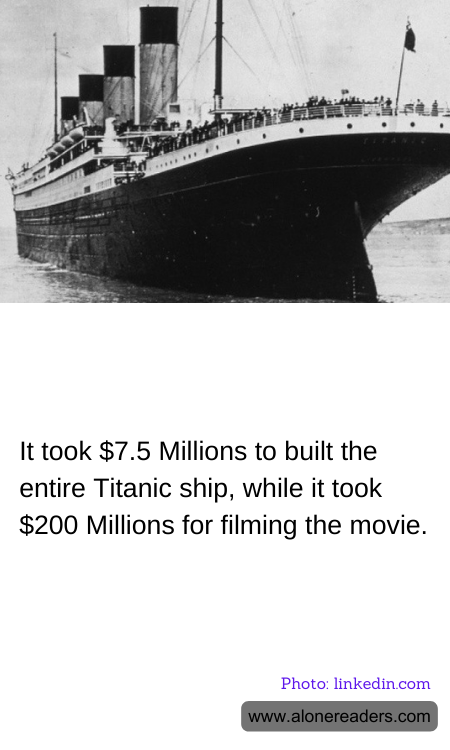
The disparity between the cost of constructing the Titanic and producing a movie about its ill-fated maiden voyage is staggering and speaks volumes about the evolution of economic value and the entertainment industry. When the RMS Titanic was built in 1912, $7.5 million was invested into crafting what was then the largest and most luxurious passenger liner in the world. Adjusted for inflation, this amount would still be significantly shy of the modern figures spent on high-budget films. In contrast, James Cameron’s 1997 film “Titanic” had a production budget that soared to approximately $200 million, underscoring not only the advancements in technology and cinematic techniques but also the increased costs associated with them.
This comparison illuminates more than just a financial discrepancy; it highlights the immense value placed on storytelling and its ability to capture and recreate historical events. The Titanic movie utilized advanced technology and extensive research to authentically replicate the ship and the tragic story, including constructing a near full-scale model of the Titanic and using sophisticated computer-generated imagery (CGI). This commitment to detail required a considerable amount of resources and human talent, all contributing to the imposing budget.
Moreover, the revenue generated by the film also paints a picture of economic transformation. Grossing over $2 billion, “Titanic” stands as a testament to the lucrative potential of the film industry, where the financial investment can yield exponential returns, a concept that was virtually non-existent in the engineering and transportation sectors of the early 20th century.
The cost comparison also highlights a shift in societal values. The original Titanic was a symbol of industrial age optimism, showcasing what engineering could achieve. In contrast, the movie is a product of its time, emblemizing the cultural and technological advancements of the late 20th century, where recreation and digital depiction hold immense value.
This contrast between the two Titanics — one, a tangible testament to the limits of contemporary engineering and the other, a representation of modern storytelling and expenditure on entertainment — reflects broader shifts in priorities and capabilities over time, offering insights into both past and present emphases in human endeavor and investment.
