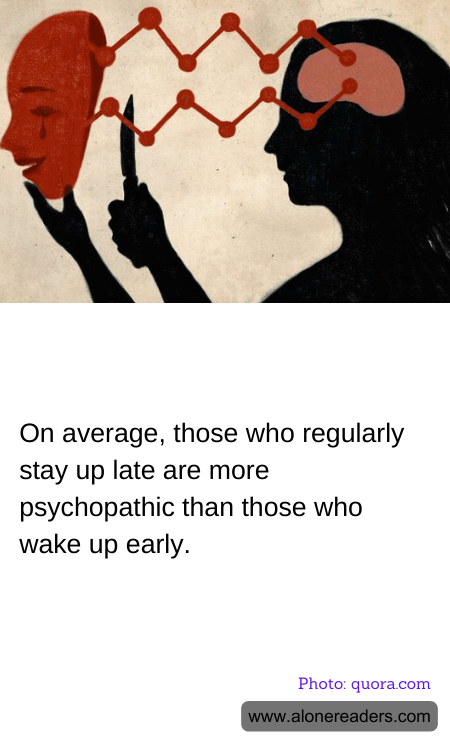
The correlation between sleep patterns and personality traits has been a subject of interest for psychologists and researchers for years. Among the various findings, one intriguing pattern noted is the relationship between nocturnal habits and psychopathic tendencies. Individuals who are naturally inclined to stay up late, often referred to as "night owels," tend to exhibit more psychopathic characteristics compared to those who are early risers, or "morning larks."
Studies have shown that the tendency to stay awake late at night may be linked to specific personality features often associated with psychopathy, such as manipulativeness, lack of empathy, and self-centeredness. Various theories have been proposed to explain why these behaviors are more pronounced in night owls. One theory suggests that the preference for nighttime activity may allow individuals with antisocial tendencies to better exploit environments where oversight is limited and social controls are reduced. Nighttime often provides the anonymity and privacy that can facilitate the less socially desirable behaviors linked with psychopathic traits.
Furthermore, research indicates that the circadian rhythms that govern sleep-wake cycles could also influence the regulation of emotions and behavior. Those who have disrupted or atypical circadian rhythms, such as individuals who are active during the night, might have a higher predisposition to psychopathy. The neurobiological underpinnings involve reduced serotonin levels which play a crucial role in impulsivity, a common trait in psychopathy.
Nonetheless, it is essential to consider these findings with caution. Being a night owl does not necessarily mean that someone is psychopathic. Many individuals are simply more productive at night and prefer working in the quiet and peaceful hours after dark without possessing any malevolent qualities. Moreover, societal norms and expectations can also shape our sleep patterns; for example, some might stay up late due to job requirements or personal circumstances rather than an inherent preference.
In conclusion, while research suggests a higher incidence of psychopathic traits among those who are active at night, it's important to recognize the diversity in human behaviors and preferences. More studies are necessary to fully understand the complex relationship between our biological clocks and personality development, considering not only the negative implications but also the broader spectrum of nocturnal lifestyles.
