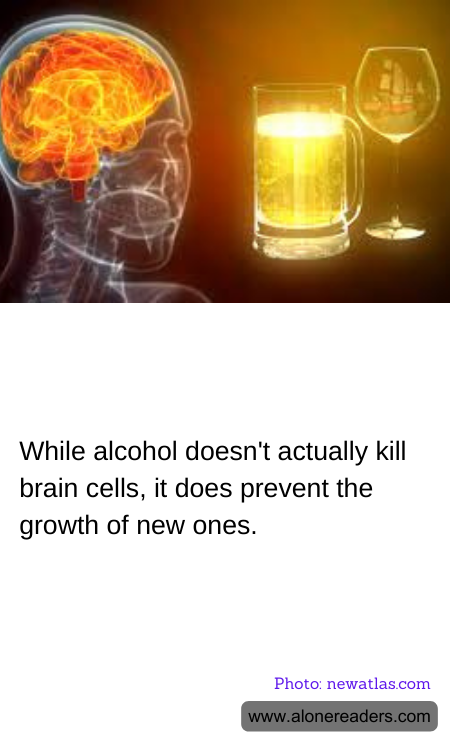
Contrary to popular belief, alcohol does not directly kill brain cells. This longstanding myth has been debunked through modern neuroscience which shows that alcohol's effects are somewhat less dire but still significant. While moderate drinking might not cause dramatic damage to the brain, the situation changes significantly with heavy and prolonged alcohol exposure.
Alcohol affects the brain in several profound ways, but rather than killing brain cells outright, it inhibits the growth of new brain cells, a process known as neurogenesis. Neurogenesis is crucial for various brain functions, such as learning and memory. The hippocampus, an area of the brain essential for memory and learning, is particularly vulnerable to alcohol-related damage. Research has demonstrated that heavy drinking can lead to a decrease in the brain's ability to produce new cells, which can result in cognitive deficits over time.
Moreover, alcohol alters the delicate balance of neurotransmitters, the chemicals that transmit signals in the brain. This disruption leads to changes in both behavior and cognition. It can decrease neurotransmitter activity, which is why alcohol often produces feelings of relaxation and sedation. However, these effects can also impair judgment, coordination, and reaction times. With chronic exposure, these changes can become more permanent, leading to long-lasting effects on the brain function.
Chronic alcohol consumption can also lead to brain shrinkage, primarily due to the loss of the brain's white matter, which significantly impairs cognitive function. This type of brain damage is often seen in individuals who have been heavy drinkers for many years and can be partially reversed with sustained sobriety, but recovery may not be complete.
It's also worth mentioning that the damage caused by alcohol extends beyond the brain itself. Alcohol abuse can lead to vitamin deficiencies, notably of thiamine, which can cause severe neurological problems such as Wernicke-Korsakoff syndrome, a disorder that severely affects memory.
In conclusion, while alcohol may not kill brain cells, it significantly impacts brain health, particularly with excessive and prolonged use. These effects can be subtle at first, leading to decreased cognitive functions and slowed down production of new neurons, progressing to more severe neurological impairments if drinking continues. It underscores the importance of moderation and the potential risks of alcohol consumption on brain health and overall well-being.
