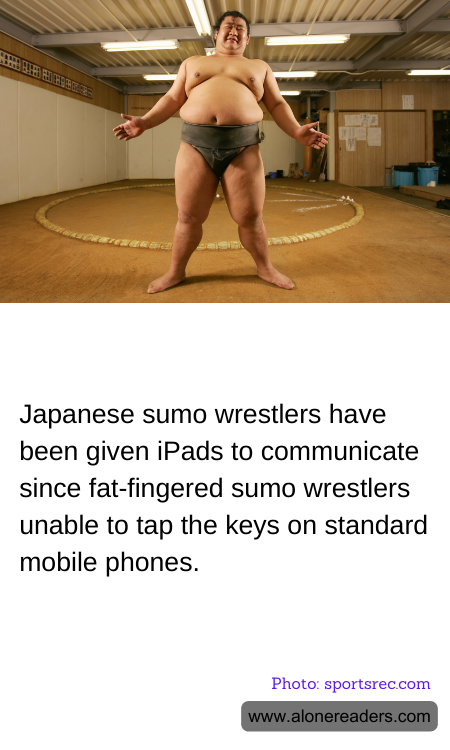
In a blend of ancient tradition and modern technology, Japanese sumo wrestlers have turned to an unexpected tool for communication: the iPad. The decision by the Japan Sumo Association to distribute iPads among wrestlers came about due to the unique challenges these athletes face with conventional technology. Sumo wrestlers, known for their impressive size and strength, often have hands too large and fingers too thick to effectively use standard smartphones or mobile phones. The small keys and touchscreens are not designed for individuals with such physical dimensions.
The introduction of iPads solved this problem thanks to their larger screen size and touch-sensitive interfaces, making it easier for the wrestlers to send emails, browse the internet, and stay connected with coaches and fellow wrestlers. This move was also partly encouraged by the need to streamline communication and reduce misunderstandings within the sumo community, which is steeped in ritual and hierarchy.
The response to the iPad initiative has been overwhelmingly positive. Wrestlers can now engage more readily in the promotion and organization of sumo events, participate in online meetings, and maintain social connections without the frustration of misdialing or mistyping due to incompatible device sizes. Moreover, this use of iPads by sumo wrestlers is a fascinating example of how traditional cultures can interact with modern technologies, finding a balance that respects historical practices while also embracing the benefits of the digital age.
This embrace of iPads by sumo wrestlers is more than a matter of convenience; it is a testament to the flexibility and adaptability of cultural institutions. As technology continues to evolve, it will be intriguing to see how other traditional practices around the world integrate new tools to meet their unique needs while preserving their rich heritage.
