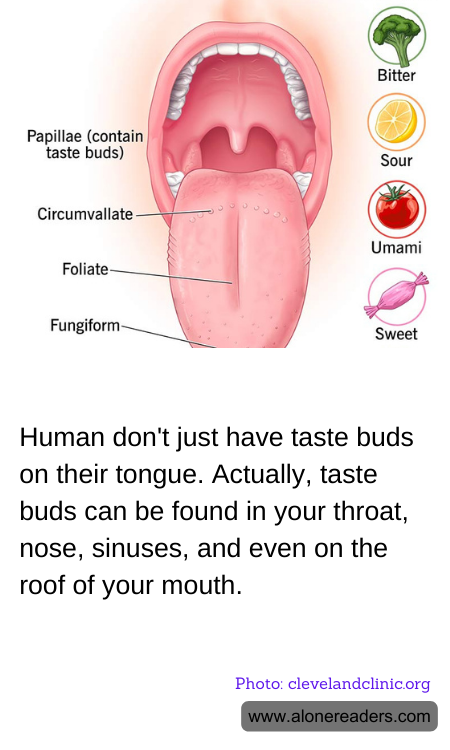
Taste is a complex sense that goes beyond just the tongue. Interestingly, taste buds are not only located on the tongue; they can also be found in several other parts of the body including the throat, nose, sinuses, and even the roof of the mouth. This widespread distribution of taste receptors plays a crucial role in how we perceive flavors.
In addition to the well-known regions on the tongue where taste buds detect sweet, salty, sour, and bitter flavors, there are additional receptors found at the back of the throat and on the epiglottis. These help in continuing the perception of taste as food travels down the throat. This is particularly noticeable when you experience the lingering taste of food after swallowing.
Moreover, the roof of your mouth (the palate) and even the upper part of the esophagus contain taste receptors that contribute to the overall taste experience. These taste buds are particularly good at detecting umami, which is often described as a savory or meaty taste. It’s the reason why foods rich in protein like cheese, tomatoes, and meat are so palatable.
The nose also plays a significant role in how we taste. While not possessing traditional taste buds, the nose houses olfactory receptors that detect smells. Up to 80% of what we perceive as taste is actually attributed to our sense of smell. During eating, flavors are released that travel up the nasal passage to the olfactory receptors, significantly contributing to flavor perception through a process called retronasal olfaction.
This extensive distribution of taste receptors throughout the mouth and nasal area explains why flavors can be perceived even when the tongue is compromised, such as during an illness when the nose is blocked. The interconnectedness of these taste and smell receptors enhances our ability to discern and enjoy a wide array of complex flavors, underscoring the sophisticated nature of the human sensory system. Understanding this can also enhance our ability to manipulate flavors in cooking, providing a more enriching eating experience.
