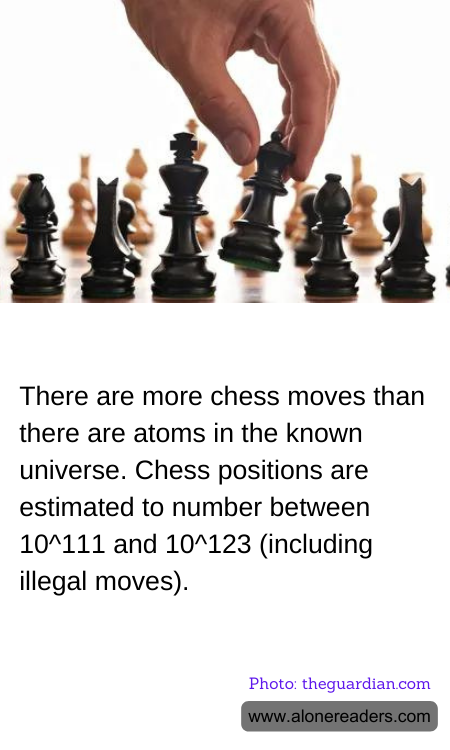
Chess, with its ancient origins tracing back over a thousand years, continues to amaze and perplex players and theorists alike. One of the most astonishing aspects of chess is the sheer number of possible moves and game scenarios it presents. It's been estimated that the number of unique chess positions ranges from 10^43 to 10^50, while the total possible number of different chess games is far vaster, estimated to be between 10^111 to 10^123. This includes not only the legal game states but also positions that can arise from illegal moves, which aren't normally possible in standard gameplay.
To put these numbers in perspective, the number of atoms in the observable universe is estimated to be around 10^80. This comparison highlights the complexity and depth of chess, which far exceeds even the vast scales of physical matter that we can observe. This immense number of possibilities is what makes chess an intriguing intellectual challenge; the game is virtually inexhaustible, with new strategies continually evolving.
The reason for such a high number of potential games and positions lies in the simple rules of chess combined with the complexity of possibilities. Each player has 16 pieces at the start, and there are 64 squares on a chess board. Each type of piece moves in a unique way, and every move changes the dynamics of the board, leading to nearly infinite ways a game can unfold. Even with computational advancements, including highly capable chess engines like Deep Blue or AlphaZero, we are nowhere near conquering all the intricacies of chess. These AI systems have certainly changed how games are played at the highest levels; for instance, they often come up with moves and tactics that are highly unconventional and which broad human players would not easily consider.
The vast number of game possibilities ensures that chess remains a deeply fascinating, challenging, and profoundly creative game, a testament to the intellectual capabilities of humans. Its complexity is a playground for strategic and tactical experimentation where both human players and increasingly, AI, continue to explore, learn, and innovate. Whether you're a seasoned grandmaster or a casual enthusiast, the game of chess offers endless opportunities for discovery and improvement, making it perpetually modern and perpetually engaging.
