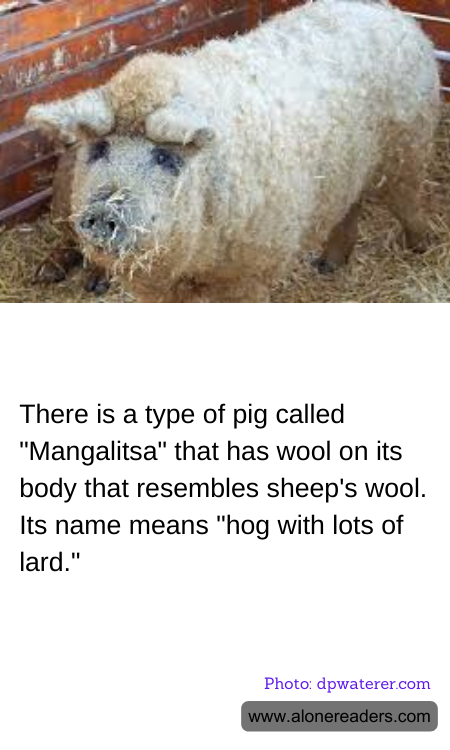
The Mangalitsa pig, also known as the Mangalica or Mangalitza, is a distinct breed notable for its thick, curly hair, which bears a striking resemblance to sheep's wool. Originally from Hungary, the name "Mangalitsa" translates to "hog with lots of lard," pointing to one of its defining characteristics - the breed's ample fat content. Developed in the early 19th century through the crossbreeding of Hungarian breeds with European wild boar and the Serbian Šumadija breed, the Mangalitsa was once the predominant pig breed throughout Hungary.
This breed's unique woolly coat is not just for show; it serves as insulation, enabling the pigs to withstand colder temperatures. This characteristic made the Mangalitsa especially popular in the harsh winters of Central Europe. Apart from its coat, the Mangalitsa pig is distinguished by its ability to produce high-quality, marbled fat, a trait that has gained the breed a reputation among gourmet chefs and food connoisseurs. The fat of the Mangalitsa is considered superior for cooking and charcuterie, offering flavors that are robust and rich.
Despite its prized status for culinary uses, the Mangalitsa fell out of favor in the mid-20th century as agricultural practices shifted towards more commercially viable pig breeds that matured faster and leaner. By the 1990s, the Mangalitsa was nearly extinct, with only a few hundred animals left. However, a resurgence in demand for high-quality, flavorful meat, along with efforts by dedicated breeders in Hungary and abroad, has helped revive the breed.
Today, the Mangalitsa is bred primarily in Hungary, but populations exist in several other European countries and even in the United States. Small-scale farmers and artisanal producers cherish the breed for its exceptional lard and the resurgence in traditional and sustainable farming practices. The Mangalitsa has not only captured the interest of those in the culinary world but has also become a symbol of conservation and heritage within the agriculture community, proving that sometimes, the old ways can indeed pave the way for the future.
