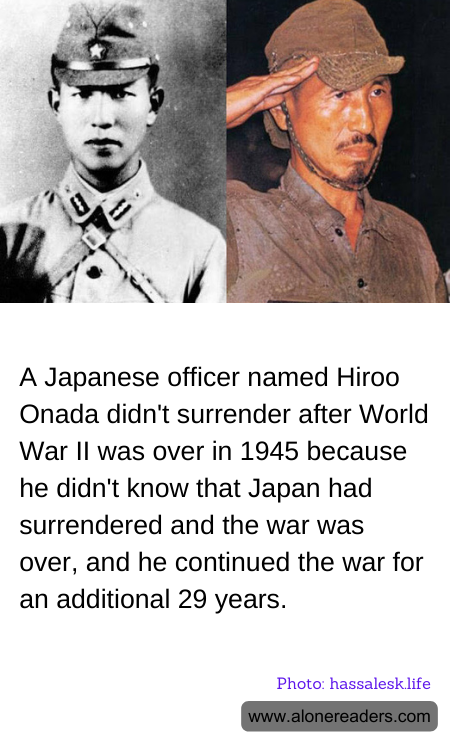
In one of the most extraordinary tales of World War II's aftermath, Japanese Lieutenant Hiroo Onoda exemplified unmatched loyalty and a powerful adherence to duty. Hiroo Onoda was stationed on Lubang Island in the Philippines in December 1944, tasked with disrupting enemy attacks and gathering intelligence. As the war concluded in 1945, Onoda, unaware of Japan's surrender, continued his mission.
Isolated in the dense jungles of Lubang, Onoda and a few companions who remained, sustained their guerilla activities, surviving on bananas, coconuts, and stolen cattle, evading capture and refusing to believe that the war had ended. Leaflets announcing Japan's surrender were disseminated over the island, but Onoda dismissed these as enemy propaganda. Even letters and pictures dropped by airplanes from his family urging him to surrender were considered elaborate hoaxes.
For nearly three decades, Onoda continued living in the jungle, adhering strictly to the code of conduct as a Japanese officer, awaiting orders from his superior. His presence on the island was occasionally noticed by local residents, and sporadic searches were conducted, but to no avail. It wasn't until 1974 that Norio Suzuki, a young Japanese adventurer, discovered Onoda and befriended him. Yet, even then, Onoda maintained that he would only surrender under orders directly from a superior officer.
The world watched in amazement when on March 9, 1974, Hiroo Onoda emerged from the jungle—his sword still in good condition, his rifle still functional and fully operational, 29 years after Japan had capitulated. He formally surrendered only after his former commanding officer, flown in from Japan, officially relieved him of duty.
Onoda's return to Japan was a media sensation, and his decades-long commitment to his orders received mixed feelings both in Japan and around the world. To some, he was a hero, exemplifying dedication and loyalty; to others, a tragic figure, isolated due to misinformation and outdated ideals.
Reflecting on his years in the jungle, Onoda noted in his memoirs that he did not consider those 29 years a waste; rather, he viewed them as part of his duty as a soldier, adhering to the discipline instilled in him by the Japanese Army. Hiroo Onoda passed away in 2014, but his story remains a powerful testament to the impact of war on the human psyche and the extraordinary lengths to which loyalty and duty can be upheld.
