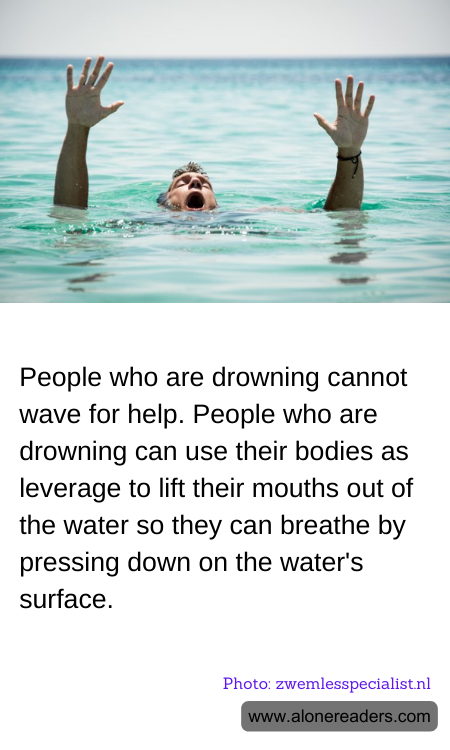
Drowning is a severe and life-threatening situation where understanding how it manifests can significantly improve the chances of detecting and rescuing a person in distress. Contrary to popular belief, drowning is often not as overt as media and entertainment depict it; it is typically a quieter event, devoid of the dramatic splashing, waving, or yelling that many expect.
Individuals undergoing drowning are physiologically incapable of performing voluntary actions such as waving for help. This is primarily because their primary focus is on breathing rather than signaling. During drowning, a person's body undergoes what is known as the ‘instinctive drowning response’. This response is a series of autonomic reactions in an attempt to avoid the actual or perceived suffocation in the water. The natural inclination is for the body to orient vertically in the water, with no supporting kick from the legs. Arms tend to press down on the water’s surface to lift the mouth out of the water for breathing. This action is not conducive to waving or performing other voluntary movements like seeking attention or aiming to grab rescue equipment.
Moreover, during drowning, the body is in a state of extreme panic and oxygen deprivation, which hampers the ability of the brain to coordinate more complex actions like shouting or making distress signals that could effectively draw attention. The respiratory system is solely focused on drawing breath, and as water enters the airways, the larynx spasms, preventing the ingestion of more water but also significantly limiting the ability to vocalize.
Understanding these behaviors is crucial for effective surveillance and rescue efforts in aquatic environments. Recognizing that someone in trouble will more likely have their head back, mouth at water level, and body in a vertical position, perhaps trying unsuccessfully to roll onto the back, allows bystanders and lifeguards to identify someone in distress quickly. Often, there might be attempts to swim in a particular direction but without any headway, and trying to roll over on the back can further indicate struggle.
Improved public awareness about the signs of drowning and how it markedly differs from common perceptions can significantly enhance safety around water bodies. By educating people about the real indicators of someone in distress in water — such as inability to speak or control arm movements, gasping or hyperventilating, and efforts to roll onto the back — quicker and more effective responses can be initiated, potentially saving lives.
