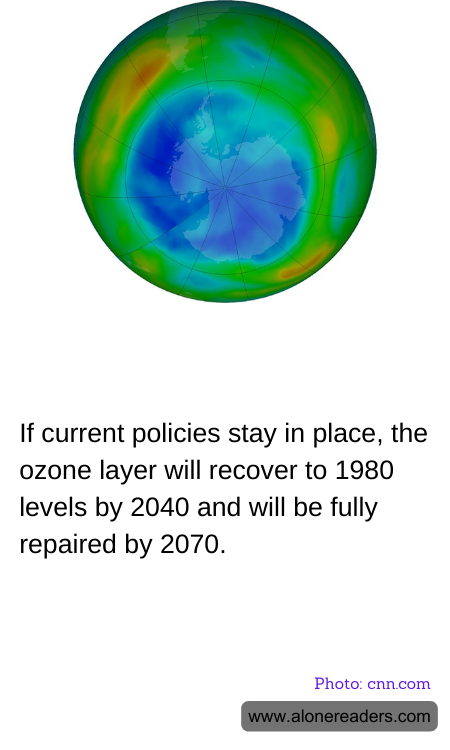
The ozone layer, a critical shield in the Earth’s stratosphere, protects life by absorbing the majority of the sun’s harmful ultraviolet radiation. In the late 20th century, scientists discovered alarming thinning of this layer caused primarily by chlorofluorocarbons (CFCs) and other ozone-depleting substances used in refrigeration, aerosols, and other industries. This discovery led to the adoption of the Montreal Protocol in 1987, an international treaty phasing out the production of numerous substances responsible for ozone depletion.
Since the implementation of the Montreal Protocol, there has been significant progress in curbing the emission of ozone-depleting substances, aiding the gradual recovery of the ozone layer. If current policies and regulatory measures continue to be enforced and adhered to, projections suggest that the ozone layer could return to its 1980 levels by about 2040. By this time, the concentrations of the most harmful chemicals will have diminished sufficiently due to the controlled measures set out by the protocol and its subsequent amendments.
The complete repair of the ozone layer, however, is expected to take a little longer. Scientists predict that by 2070, the ozone will likely have recovered fully, marking a significant turnaround from the deterioration observed in the late 20th century. This timeline is contingent on continued global compliance with the Montreal Protocol and potentially new enhancements to tackle any emerging threats to the ozone recovery process.
The trajectory towards healing the ozone layer is not just a victory for environmental regulatory frameworks but also a crucial factor in safeguarding public health and ecosystems. The depletion of the ozone has been linked to higher rates of skin cancer, cataracts, and other health issues caused by increased UV radiation reaching the Earth's surface. Furthermore, healthy ozone levels are vital for the stability of ecosystems, particularly in marine environments where sunlight penetrates the upper layers of the ocean and affects a vast array of biological processes.
Therefore, monitoring the progress in the rejuvenation of the ozone layer and ensuring strict adherence to environmental policies remain imperative. As science continues to advance our understanding of atmospheric chemistry, it is essential for international agreements to evolve and adapt, ensuring the protection and sustainability of our atmosphere. The anticipated full recovery of the ozone layer by 2070 stands as a testament to what can be achieved when global cooperation is aligned with scientific insights for the betterment of our planet.
