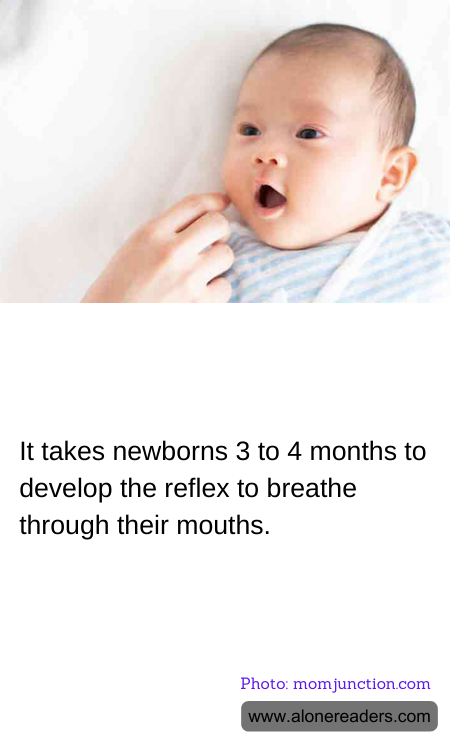
Babies, in the first few months of life, exhibit a fascinating array of reflexes which are critical to their survival. One such aspect involves their breathing pattern. Typically, newborns are obligatory nose breathers, meaning they primarily breathe through their noses for the first 3 to 4 months of their life. This is not merely a preference but a physiological necessity for them during this stage.
The reason behind this nasal breathing is multifaceted. Primarily, breathing through the nose helps to filter out particles and pathogens which can be crucial for a newborn whose immune system is still developing. Furthermore, nasal breathing aids in proper humidification and warming of the air before it reaches the lungs, which is vital for delicate infant respiratory systems.
Mouth breathing is usually not observed in infants unless their nasal passage is obstructed, such as by mucus, in which case they adapt temporarily to breathe through their mouth. Over time, infants gradually develop the reflex and ability to breathe through their mouths, a change usually noticeable around the third or fourth month. This development coincides with other milestones, such as improved head and neck control, which also contribute to their ability to breathe more efficiently through either the nose or mouth.
This transition is a natural part of growth and is a precursor to more mature breathing patterns seen in older children and adults. Notably, while the ability to breathe through the mouth seems like a small milestone, it is crucial during instances when the nasal passage is blocked due to colds or respiratory infections. It ensures that the baby can still breathe effectively despite nasal congestion.
Understanding these physiological nuances is essential for parents and caregivers as it emphasizes the importance of monitoring and managing nasal blockages during infancy. Additionally, it provides insight into the developmental milestones that are often unnoticed but are critical for the overall health and development of the baby.
