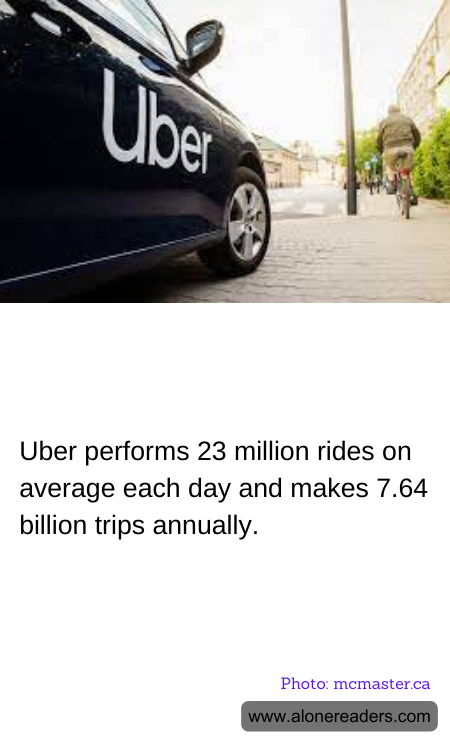
Uber, the global ride-hailing giant, has made a significant impact on the way people traverse cities around the world. With an average of 23 million rides each day, Uber facilitates a vast network of transportation options for countless individuals. Delving deeper into these statistics reveals the massive scale of Uber's operations, amounting to approximately 7.64 billion trips annually. This immense volume of daily and yearly trips underscores the critical role that Uber plays in urban mobility.
The significant number of daily rides highlights the shifts in consumer preferences for transportation. Traditional taxis and public transportation systems, while still very much in use, are now supplemented extensively by ride-hailing services which offer user-friendly, technology-driven solutions. Consumers appreciate the convenience and reliability offered by Uber, evident from the tap of a button on their smartphone. This level of accessibility and predictability in urban transportation was unprecedented before the rise of Uber and similar platforms.
Uber's impact extends beyond mere numbers; it has also sparked substantial economic and social changes. For drivers, Uber provides a flexible work option, where they can choose when and where to work. This has opened new job opportunities for millions globally, often in places where conventional jobs are scarce or do not fit the needs of everyone. Economically, Uber has contributed to the gig economy's growth, influencing how job markets function in many urban areas.
Moreover, Uber’s data-rich environment offers unique insights into urban transportation patterns, which could be leveraged for improving city planning and reducing traffic congestion. By analyzing the routes, travel times, and peak ride-hailing hours, urban planners can gain a better understanding of how cities move and grow. However, this incredible growth and integration into daily life also bring challenges such as regulatory concerns, impacts on traffic patterns, and questions about workers' rights and benefits under the gig economy model.
Despite these challenges, Uber continues to expand its services, exploring options like food delivery with Uber Eats and innovative last-mile delivery solutions. These expansions not only increase the utility of Uber's platform but also consolidate its position as an integral part of urban life in cities around the world. The statistics of daily and annual rides elucidate just how deeply Uber has embedded itself into the fabric of urban transportation, turning it into an essential service for millions. Through continual innovation and adaptation, Uber remains at the forefront of the evolving dynamics of global transportation.
