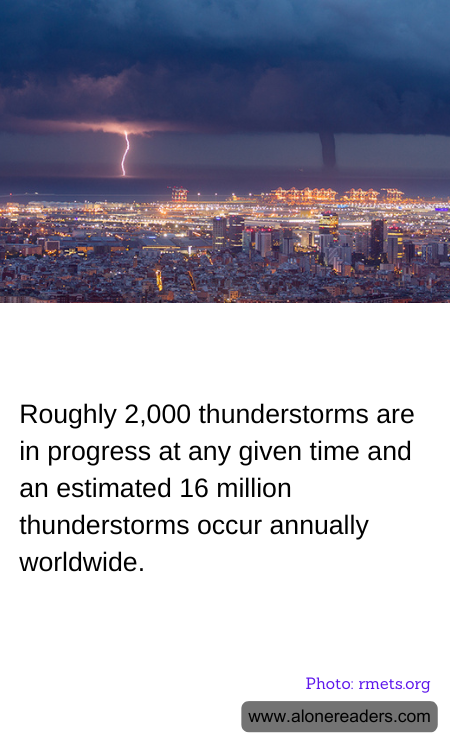
Thunderstorms are among the most common yet dynamic atmospheric occurrences on our planet. On any given moment, there are approximately 2,000 thunderstorms happening around the world. These impressive and often dramatic meteorological events contribute to an estimated total of 16 million thunderstorms each year globally, emphasizing their frequent occurrence and potential impact on daily weather patterns.
Thunderstorms form through a combination of moisture, rapidly rising warm air, and a triggering mechanism, such as a cold front. The life cycle of a thunderstorm is fascinating, typically progressing through three stages: the developing stage, the mature stage, and the dissipating stage. In the developing stage, cumulus clouds form and ascend due to the buoyant force of warm air. As these clouds reach higher and colder parts of the atmosphere, the water vapor contained within them condenses to form precipitation, marking the transition to the mature stage. This stage is characterized by heavy rain, lightning, thunder, and sometimes severe features like hail and gusty winds. Eventually, the storm exhausts the warm air that fuels it, leading to the dissipation stage, where the storm weakens and the cloud begins to break apart.
Lightning and thunder, the hallmarks of thunderstorms, are caused by the rapid expansion of the air due to intense heating by a lightning bolt, which can heat the air to temperatures hotter than the surface of the sun momentarily. Worldwide, there are about 100 lightning strikes per second - a testament to the sheer energy and powerful nature of these storms.
The geographical distribution of thunderstorms varies significantly, with regions such as Central Africa and the southeastern United States experiencing a high frequency of thunderstorms, thanks to their warm, moist tropical climates that are ideal for thunderstorm development. In contrast, polar regions see very few thunderstorms owing to the cold, dry air.
Understanding thunderstorms is crucial for weather forecasting and disaster preparedness. They can cause significant damage to infrastructure, disrupt utilities and services, and in severe cases, result in fatalities. Improved meteorological techniques have enhanced the ability to predict thunderstorms and mitigate their impacts on human life and activities. Advanced radar systems and satellite imaging play pivotal roles in tracking storm development and issuing timely warnings to affected populations. Moreover, ongoing research into thunderstorm dynamics helps refine predictive models, aiding in better preparedness for these natural phenomena.
In conclusion, the prevalence and intensity of thunderstorms across the globe underscore the dynamic and powerful forces of nature. While they pose challenges, thorough understanding and advanced forecasting continue to mitigate the risks associated with thunderstorms, protecting lives and property from their might.
