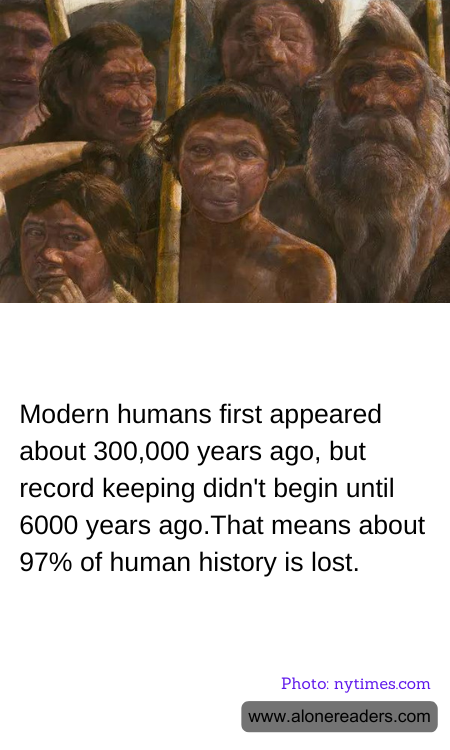
The history of modern humans is both deep and complex, extending back roughly 300,000 years. However, our direct record of past events only dates back about 6,000 years, when ancient civilizations first developed writing systems. This means that a staggering 97% of human history is undocumented and shrouded in mystery.
Before the advent of writing, information was passed down through oral traditions, including stories, songs, and rituals. These oral methods were effective in preserving some information about cultural practices, beliefs, and significant events. Yet, without written records, much of the fine details and exact timelines have been lost or blurred over generations. The prehistoric era, therefore, is mostly reconstructed through the study of archaeology, anthropology, and the genetic analysis of human remains.
Archaeologists piece together the human story by excavating and analyzing artifacts, fossils, and other physical evidence left behind by ancient peoples. This includes tools, artwork, the remains of dwellings, and human fossils. Through such findings, scientists have been able to uncover a wealth of information about how early humans lived, migrated, and adapted to changing environments.
One of the remarkable aspects of human prehistory is the spread of modern humans from Africa to the rest of the world. This migration began approximately 60,000 to 80,000 years ago, and it stands as a testament to human resilience and adaptability. Early humans thrived in a variety of ecosystems, from the icy tundra of the Ice Age to the lush landscapes of the tropics.
The lack of written records for 97% of human history poses significant challenges, but also highlights the importance of interdisciplinary research in uncovering our past. Techniques such as DNA analysis and the dating of geological layers continue to reveal insights that were once thought impossible without written documents. For instance, genetic studies have traced variations in human DNA back to specific migrations and adaptions, providing a biological archive of human history that complements physical and cultural findings.
While it is intriguing to consider the vast expanse of time that remains undocumented by textual records, the mysteries of prehistoric human life continue to be unlocked through the diligent work of researchers in various scientific fields. Each discovery contributes to a better understanding of the human journey and adds depth to our appreciation of the ancestors upon whom modern civilization is built. The story of human history is far from complete, and each new piece helps fill gaps in the long, intricate narrative of our species.
