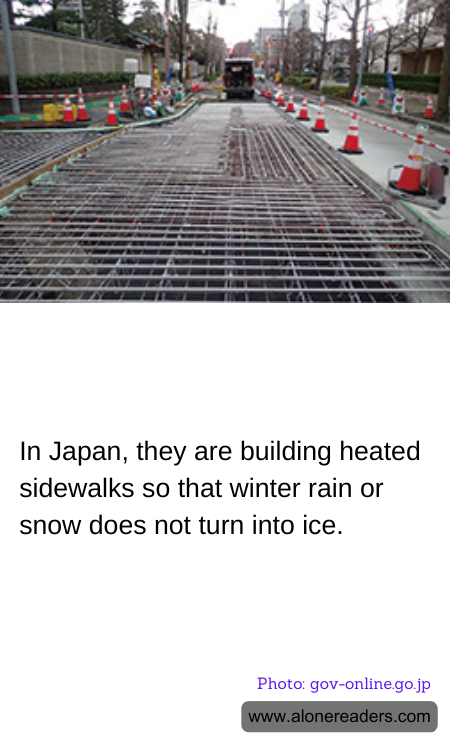
In Japan, a country famed for its innovative approaches to everyday challenges, the introduction of heated sidewalks is a significant development aimed at combating the hazardous conditions of winter. These heated sidewalks are designed to prevent the accumulation of snow and ice, ensuring safer pedestrian movement during the snowy season. This technology is not only a testament to Japan's forward-thinking in urban planning but also reflects its commitment to public safety and convenience.
The concept of heated sidewalks involves embedding heating elements beneath the pavement, which are then activated during wintry weather conditions. These elements generate enough heat to melt snow and ice on contact, thereby preventing slippery surfaces that can lead to falls and injuries. This system is particularly useful in cities like Sapporo, famous for its heavy snowfall, where maintaining clear walkways becomes a massive seasonal challenge.
The benefits of heated sidewalks extend beyond mere convenience. They represent a crucial development in accessibility. For the elderly and those with mobility issues, icy sidewalks can be a significant barrier during winter months, isolating individuals and making daily tasks hazardous. Heated sidewalks help in ensuring that these vulnerable groups can maintain their mobility and independence throughout the winter.
Moreover, the economic impact of such a system is also notably positive. By reducing the need for constant snow removal, municipalities can save on the labor and environmental costs associated with salt and other chemical deicers, which are often used to manage ice. These substances can be harmful to the local wildlife and plant life and can degrade water quality through runoff. Heated sidewalks offer a more sustainable option that lessens environmental impact and could potentially decrease municipal expenses in the long run.
However, the implementation of heated sidewalks must be weighed against the cost and energy requirements of the system. The initial installation can be expensive, and the sidewalks require a significant amount of electricity to operate effectively. It necessitates careful consideration and planning to ensure that it is both economically viable and sustainable. Some regions might integrate renewable energy sources, like solar power, to offset some of these energy costs.
In conclusion, as Japan continues to innovate in its infrastructure, the adoption of heated sidewalks is a step forward in creating a safer, more accessible, and environmentally friendly urban environment during the winter months. It's a pioneering move that could potentially set a precedent for other cold-weather nations around the world, highlighting a blend of technology, safety, and environmental stewardship in modern city planning.
