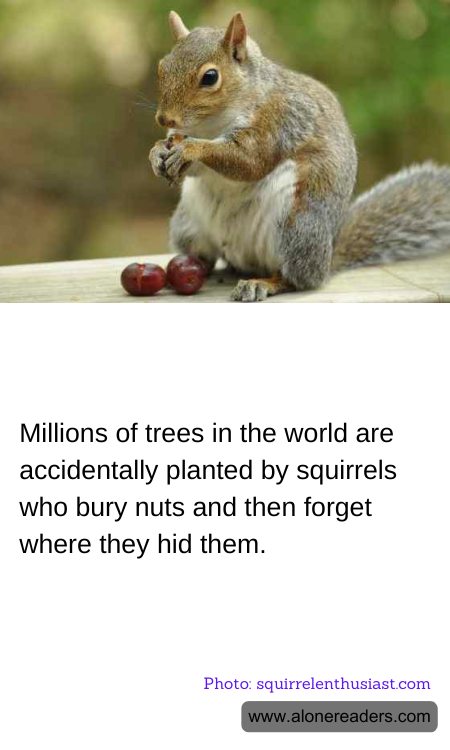
In the intricate web of natural ecosystems, the playful activities of squirrels have had an unexpected yet vital impact on forest regeneration and expansion. These small, often overlooked creatures inadvertently contribute to the planting of millions of trees worldwide, thanks to their habit of burying nuts. This behavior, primarily intended as a way to store food for colder months, plays a crucial role in the propagation of many tree species.
Squirrels gather seeds and nuts during their active seasons, which they stash away in various locations to ensure a continuous food supply throughout the winter. The process, known as caching, involves the squirrel digging a small hole in the ground and burying the nut, sometimes covering it with leaves or other natural debris to conceal it from other animals. However, not all buried nuts are retrieved. The forgotten caches, nestled safely in the soil, often germinate and slowly grow into new trees.
This serendipitous act of planting helps maintain and expand forests, which are critical for carbon sequestration, thus contributing to the mitigation of climate change. Furthermore, these new trees provide habitat for wildlife, stabilize soil, and enhance air and water quality. The variety of trees that owe their beginnings to squirrels includes oaks, hazelnuts, and walnuts, among others, characterized by their hardy seeds that can survive the winter underground.
The impact of squirrels on forest dynamics highlights the interconnectedness of biodiversity and ecosystem health. By performing their natural behaviors, these small mammals contribute significantly to forest ecosystems, which are some of the most vital habitats on the planet. Conservation efforts often focus on protecting large swathes of forestland, but understanding and aiding the roles of small animals like squirrels is equally important. These efforts can include maintaining environments that support the natural activities of squirrels, such as providing a mix of mature and newly growing trees and other plant species that produce the nuts and seeds they require.
In conclusion, the accidental forestry efforts by squirrels underscore the importance of every organism in the ecosystem, no matter how small. Their forgotten treasures, meant to be meals tucked away for another day, end up serving a greater purpose by fostering new life and aiding in the healing and sustaining of our planet's green spaces. As such, it's clear that protecting and understanding wildlife behaviors is not just about preserving animals but about maintaining the health of entire ecosystems.
