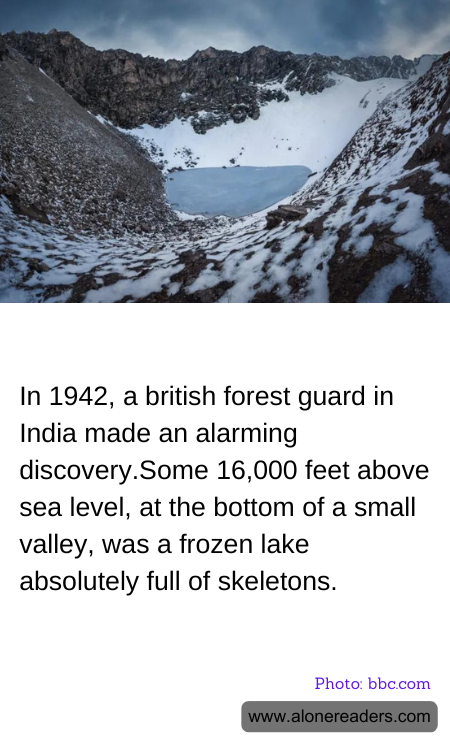
In 1942, during a routine patrol in the Himalayas, a British forest guard stumbled upon a haunting and perplexing sight. Nestled in a valley at an altitude of 16,000 feet was Roopkund Lake, a shallow glacial lake that is now better known as Skeleton Lake due to its gruesome contents. The guard reported finding the lake filled with hundreds of human skeletons. Initially, the origins and cause of death of these skeletons remained a mystery, fueling wild speculations ranging from religious rites to an epidemic.
Further investigations and studies over the years gradually pieced together the macabre story of Roopkund Lake. Radiocarbon dating indicates that the bones are around 1,200 years old, dating back to around 800 A.D. More detailed examinations revealed fractures on many of the skulls, which, upon forensic analysis, appeared to be caused by blunt, round objects about the size of cricket balls. This led to a prevailing theory that the group might have died due to a sudden and severe hailstorm. Such storms, with hailstones large enough to cause fatal injuries, are not unheard of in the region and could have caught a large group of travelers off-guard, leading to their untimely and tragic deaths.
Anthropological studies suggest that the victims were both male and female, of various ages, indicating that the group could have been comprised of pilgrims heading through the Himalayan region. This aligns with the local folklore and songs of the nearby villages, which narrate tales of a goddess so enraged at outsiders who defiled her mountain sanctuary that she rained death upon them by flinging hailstones 'hard as iron'.
Every year, as the ice melts, more skeletons are revealed in Roopkund Lake, and with them, more clues emerge. Despite the advances in scientific investigations, the site retains an air of mystery, attracting trekker, historians, and curious tourists alike. The lake is situated on a pilgrimage route of the Nanda Devi festival, which is held once every twelve years, suggesting a likely connection between the skeletons and the pilgrims partaking in the Nanda Devi Raj Jat.
The mystery of Roopkund Lake is a stark reminder of nature's power and unpredictability. It also serves as a cultural heritage site that encapsulates a historical narrative of ancient travel routes, regional folklore, and tragic demise. These elements collectively underscore the enigmatic allure of Roopkund Lake, preserving it as a subject of scientific curiosity and a poignant chapter of Himalayan history.
