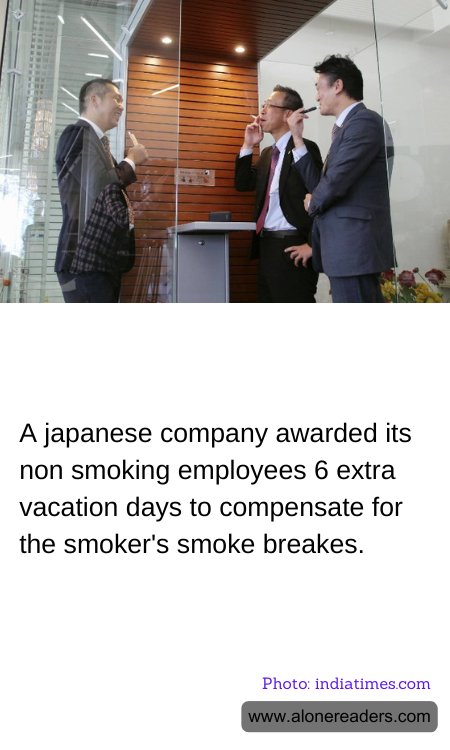
In a unique approach to promote a healthier workplace, a Japanese company instituted a policy awarding non-smoking employees an additional six days of vacation annually. This initiative was designed to balance out the time smoking employees spent on cigarette breaks, a common practice that non-smokers felt was unfair. This policy underscores the ongoing debates around smoking in the workplace and its impact on productivity and employee morale.
The company, recognizing the disparity in breaks between smokers and non-smokers, aimed to incentivize employees to quit smoking, thereby creating a healthier work environment and reducing the number of smoking breaks that can interrupt work flow. The decision was also influenced by broader public health concerns, as smoking remains one of the leading preventable causes of death worldwide.
The response from employees was overwhelmingly positive, especially among non-smokers who felt that the extra vacation days were a fair compensation for the time smokers spent away from their desks. Moreover, some smokers were motivated to quit smoking, seeing it as an opportunity to reap the benefits of additional time off. This policy not only highlighted the company’s commitment to employee wellness but also sparked discussions in other organizations about how to handle similar disparities and encourage healthier lifestyle choices among employees.
Critics of the policy argued that it might create a divide or feelings of resentment between smoking and non-smoking employees. However, the company reported a harmonious implementation, with an increase in team cohesion and overall job satisfaction. The initiative also served as a case study for HR departments in different corporations looking for innovative ways to enhance workplace health and equity.
Overall, the introduction of extra vacation days for non-smokers as a compensatory measure is a reflection of the evolving strategies companies are employing to foster productive and healthy work environments. While it addresses the immediate inequity perceived by non-smokers, it also opens up a broader conversation about workplace habits, health benefits, and employee welfare, setting a precedent that might inspire similar policies elsewhere.
