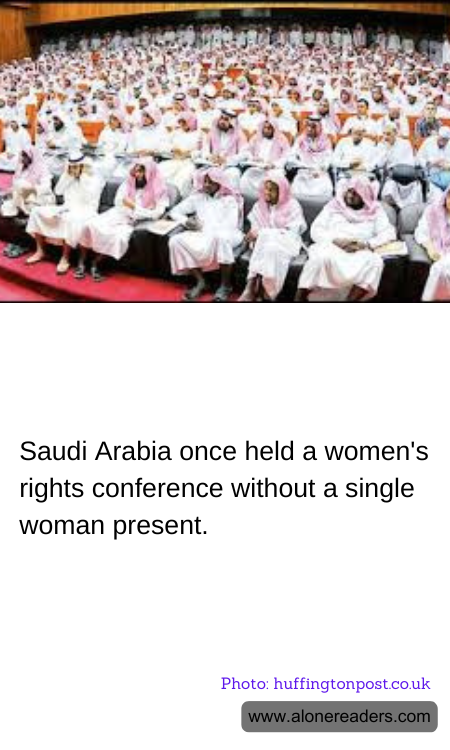
In a striking paradox that drew international scrutiny and sparked online uproar, Saudi Arabia once hosted a major women's rights conference without including a single woman on the panel. The event, which took place several years ago, featured a group of men discussing the role of women in society—an image that not only appeared tone-deaf but also highlighted the ongoing issues of gender inequality in various parts of the world.
The conference was meant to be a serious discussion about the integration of women into Saudi Arabian society and their role in shaping the future economic and social landscape of the country. However, the absence of women from the panel turned the event into a symbol of the barriers women still faced in the kingdom. At the time, Saudi women were grappling with numerous restrictions, such as the ban on driving, guardianship laws, and limited participation in public and political life.
This led to criticisms and mocking in social media, with observers pointing out the irony and inefficiency of discussing women's rights without women's input. The incident served as a stark example of the limitations of top-down approaches to gender issues when they fail in inclusivity and representation of women's voices.
Since then, Saudi Arabia has made headlines with a series of reforms under its Vision 2030 program, aimed at reducing the country's dependence on oil and modernizing its society. These changes include lifting the ban on women driving in 2018, easing of guardianship laws, and increased presence of women in the workforce. These reforms are seen both as a step towards greater gender equality and a pragmatic economic move, as the kingdom bolsters its workforce and public image.
Despite these changes, the story of the women-less panel remains pertinent as it underscores the significant road that still lies ahead in the fight for gender equality, not just in Saudi Arabia but around the globe. It serves as a reminder that meaningful discourse about women’s rights must necessarily include women themselves and that true progress is built on the foundation of inclusive dialogue and active participation of all stakeholders.
