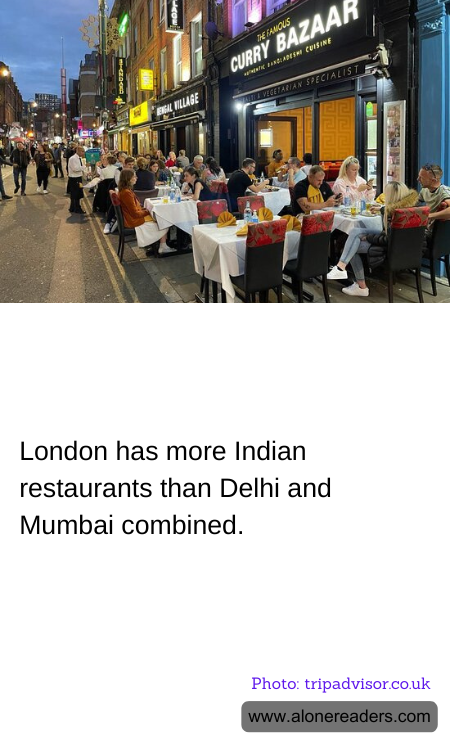
London, a vibrant and pulsating metropolis, has long been renowned for its diverse culinary scene, reflecting its multicultural population. One of the most popular aspects of this culinary diversity is its robust offering of Indian cuisine. In an impressive statistic, London boasts more Indian restaurants than Delhi and Mumbai combined. This proliferation of Indian dining options in London is not just a testament to the city's large South Asian community but also to the deep-seated British love for Indian food, which, over decades, has become a staple of the UK dining experience.
The roots of this phenomenon can be traced back to the times of the British Raj in India, which influenced British culture, especially in terms of cuisine. Post World War II, a significant number of South Asians moved to Britain, and by the 1970s and 1980s, Indian restaurants began popping up all over London. What started as an ethnic novelty quickly became mainstream. "Going for an Indian" became entrenched in British vernacular, and dishes such as Chicken Tikka Masala were famously claimed to be "a true British national dish."
Today, these restaurants vary from high-end establishments offering gourmet versions of Indian regional dishes to the more traditional curry houses providing hearty and flavorful meals at more modest prices. Each restaurant brings something unique to the table, often specializing in different regional cuisines from the Indian subcontinent, including Punjabi, Gujarati, Goan, and South Indian, reflecting the diversity within Indian culinary traditions themselves.
Moreover, the evolution and innovation in Indian cuisine in London continue to accelerate. Fusion dishes and modern interpretations that meld Indian flavors with British ingredients or cooking techniques are becoming increasingly popular. This innovation keeps the food vibrant and appealing to a mass audience, continually broadening its allure.
Given the sheer number and range of Indian restaurants in London, from the curry houses of Brick Lane to the Michelin-starred establishments in the city's affluent areas, London's claim of having more Indian restaurants than major Indian cities like Delhi and Mumbai underscores not only a rich history of cultural integration and culinary evolution but also highlights how global cuisines can find a new home abroad, adapting to and enriching local tastes and cultures. London's Indian restaurants, thus, are not just dining venues; they are a lively and delicious chronicle of ongoing cultural dialogue and exchange.
