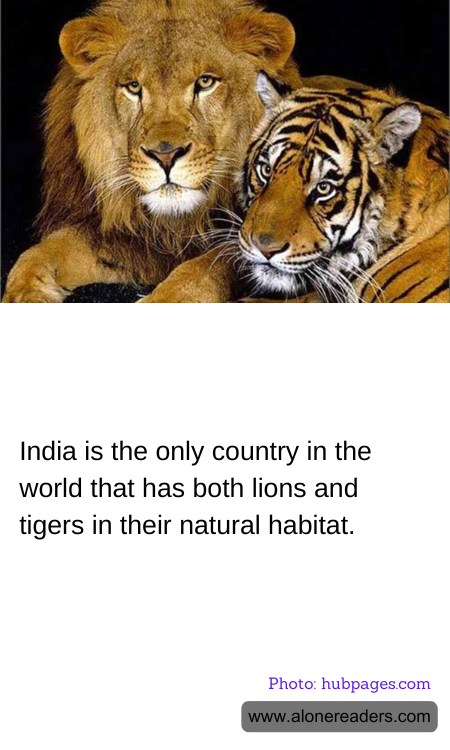
India, with its vast and diverse landscapes, offers a unique spectacle of wildlife that is unparalleled across the globe. Among the most captivating of its natural inhabitants are the majestic big cats: the lion and the tiger. India holds the distinctive status of being the only country in the world where both these species coexist in their natural habitats, showcasing a rich biodiversity that is as complex as it is rare.
The Asiatic lion, a cousin of the African lion, is primarily found in the Gir Forest National Park in the western state of Gujarat. This region provides a perfect backdrop for these regal animals, with its dry deciduous forests and grassy scrublands. Over the years, concerted conservation efforts have helped rebound the population of Asiatic lions, which once teetered on the brink of extinction. Today, these efforts have turned the Gir Forest into a sanctuary where these magnificent creatures roam freely.
On the other hand, the Bengal tiger, perhaps the most famous of India's wild animals, has a broader range across the country. Predominantly found in regions like the Sundarbans in West Bengal, which is a unique mangrove ecosystem, and other national parks such as Jim Corbett and Bandhavgarh, these tigers are a vital part of India’s wildlife. The presence of tigers in India is critical as it supports biodiversity and helps maintain the balance within ecological systems.
The coexistence of lions and tigers in India is not just a symbol of natural diversity but also a testament to the country’s ongoing conservation initiatives. Despite the challenges posed by habitat loss and human-animal conflicts, India’s wildlife policies have evolved to focus more on sustainable practices and community involvement, which are crucial for the survival of these species.
Moreover, these majestic animals are deeply woven into the cultural fabric of India, featuring prominently in art, folklore, and religious symbolism. Their existence adds to the rich tapestry of Indian heritage, offering yet another layer of connection between the natural world and human culture.
Indeed, the survival and thriving of lions and tigers in India represent a beacon of hope for conservationists worldwide, proving that with dedicated efforts, it is possible to preserve even the most endangered species. As India continues to navigate the challenges of modernization and conservation, it remains a critical player in the global conversation on biodiversity and environmental stewardship.
