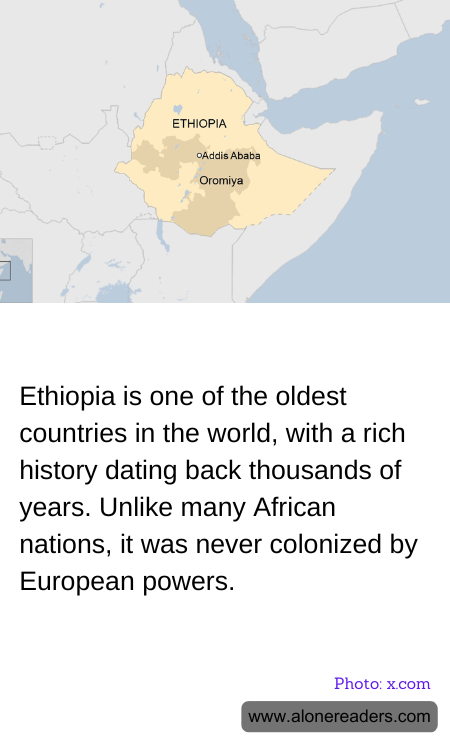
Ethiopia, often described as the cradle of civilization, is a country steeped in history that stretches back over three millennia. It is distinct within the African continent as it stands as one of the few nations that was never colonized, preserving its rich heritage and culture throughout the ages. This resilience is symbolized by the famous victory at the Battle of Adwa in 1896, where Ethiopian forces defeated Italian invaders, marking a significant and rare triumph of an African army over a European colonial power.
The roots of Ethiopian civilization trace back to the Kingdom of Aksum, an ancient empire that was once a formidable trading realm and reputedly home to the Queen of Sheba. The remains of massive stelae and ancient obelisks, some of which still stand today in the city of Axum, bear testimony to a rich and complex ancient civilization. Besides its historical architectures, Ethiopia is renowned for its connection to the Solomonic dynasty, claiming descent from the biblical King Solomon and the Queen of Sheba, a lineage believed to have been maintained until the rule of Emperor Haile Selassie was abolished in 1974.
The country's landscape is just as varied as its history—from the rugged Simien Mountains, home to some of Africa’s highest peaks and a variety of unique wildlife, to the vast, surreal Danakil Depression, one of the hottest places on earth. The cultural diversity of Ethiopia is mirrored in over 80 ethnic groups, each with its own language, traditions, and customs, making it a mosaic of cultures.
Ethiopia is also the site of many significant archaeological discoveries contributing to our understanding of human history, including the famous 3.2 million-year-old hominid fossil "Lucy" (Dinkenesh in Amharic), discovered in 1974. This find has been instrumental in the study of human evolution, suggesting that the region was a hotbed of human activity and evolution.
Religion has also played a significant and influential role in shaping the nation. Ethiopia is one of the earliest nations to adopt Christianity in the first half of the fourth century, and the Ethiopian Orthodox Church has a history that is integral to the identity of its people. The church’s rituals and sacred sites, such as the rock-hewn churches of Lalibela, crafted in the 12th century, continue to be a profound part of Ethiopian life and a major draw for international tourists interested in religious history.
Today, Ethiopia is a federation that strives towards progress and development while facing various challenges. It retains its ancient character, seen in its traditions and rituals, yet it is also dynamically engaging with the global community to shape a promising future for its diverse population. As it balances modernity and rich history, Ethiopia remains a nation of profound depth and enduring mysteries, inviting explorers and scholars alike to delve into the chronicles of one of the world's oldest continuous civilizations.
