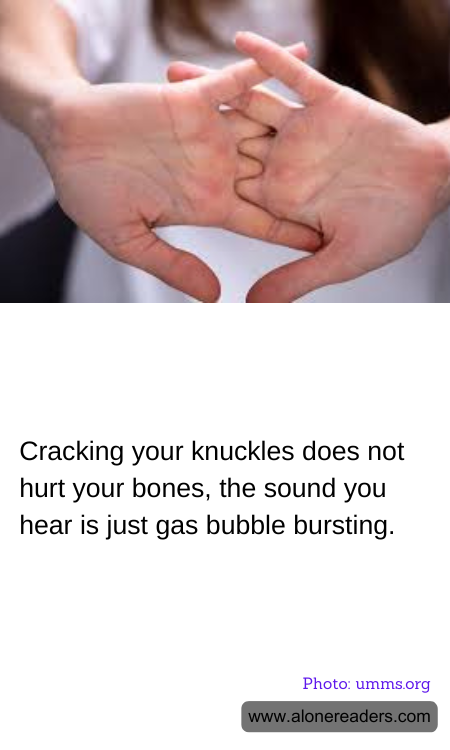
The familiar pop of knuckle cracking is a common habit for many, yet it often raises concerns about potential harm to the bones involved. There's a pervasive myth that associates this action with various negative outcomes, such as arthritis or other bone-related issues. However, scientific research suggests that the action of cracking knuckles has more benign origins and implications.
The sound heard when someone cracks their knuckles is not caused by bones grinding or ligaments snapping, but rather by the bursting of gas bubbles. Within the synovial fluid, a substance that lubricates joints and keeps the motion of the joint smooth, gases like nitrogen, oxygen, and carbon dioxide can build up. When the joint is manipulated or "cracked," it causes a sudden decrease in the pressure inside this joint capsule, leading to the rapid release of these gases and creating a popping or cracking sound.
Studies have sought to examine the long-term effects of knuckle cracking, particularly in relation to osteoarthritis. These studies have largely concluded that there is no significant correlation between knuckle cracking and the development of arthritis in the hands. For example, a notable 2011 study published in the Journal of the American Board of Family Medicine found that, among its participants, knuckle cracking did not appear to increase the risk of osteoarthritis.
That being said, while cracking your knuckles might not damage the bones or lead to arthritis, it can occasionally lead to other outcomes. Some people might experience soft tissue injuries from excessive or improperly executed knuckle cracking, and it can lead to reduced grip strength over time. There could also be swelling in the joint if done excessively.
Given the lack of harmful associations with bone health, whether or not to crack one’s knuckles becomes largely a matter of personal preference — bearing in mind not to exert excessive force to avoid potential soft tissue injuries. Nonetheless, if one experiences pain or discomfort after cracking their knuckles, this might be an indicator to consult with a healthcare professional as it could signal other underlying joint issues. Thus, while knuckle cracking is mostly a harmless habit, listening to one's body and ensuring a gentle approach is key to preventing any possible negative effects.
