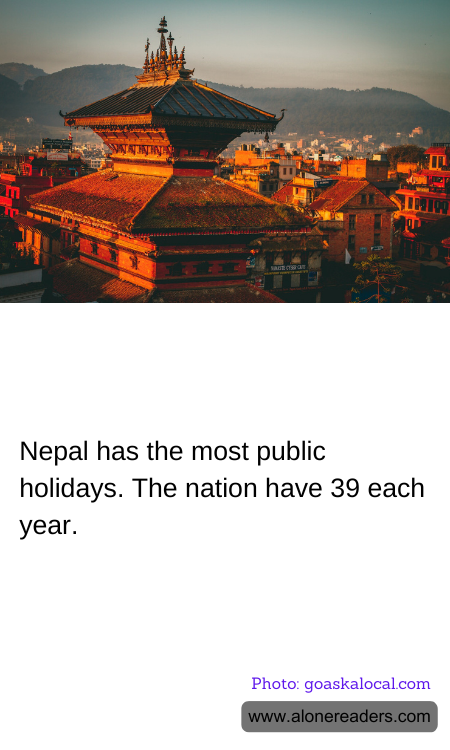
Nepal is known for its rich cultural diversity and tradition, which is reflected in the number of public holidays celebrated throughout the country. With 39 public holidays annually, Nepal holds the record for having the most public holidays in the world. This large number of holidays can be attributed to the country’s multicultural demographic, which includes numerous ethnic groups and religions.
The multitude of festivals celebrated by different communities is the primary reason behind the extensive number of public holidays. Major religions such as Hinduism, Buddhism, Islam, and Christianity are all practiced in Nepal, and each has its own set of festivals that are recognized and celebrated nationwide with public holidays. For instance, Dashain, a fifteen-day Hindu festival which marks the victory of the goddess Durga over evil, and Tihar, also known as Deepawali, where homes are decorated and illuminated, are among the biggest and most anticipated holidays in Nepal. Likewise, Buddha Jayanti, the birth anniversary of Lord Buddha, and Eid, celebrated by the Muslim community, are public holidays.
Adding to the cultural and religious holidays are several national days such as Republic Day and Constitution Day which recognize significant historical and political milestones. The diversity in celebrations not only enriches the cultural fabric of the nation but also promotes a sense of unity and understanding among its people.
However, the high number of holidays has its drawbacks, particularly in terms of economic productivity. Businesses often face disruptions due to frequent breaks, impacting overall economic activities negatively. There have been discussions and debates about the economic impact versus the cultural preservation these holidays entail. Nonetheless, many locals believe that these days are essential for maintaining the cultural heritage and allowing time for family and community bonding.
In conclusion, Nepal's extensive list of public holidays is a testament to its rich mosaic of cultures and traditions. While these holidays might pose challenges to economic productivity, they play a crucial role in reinforcing the nation's cultural identity and cohesion among its diverse population, offering valuable time for rest, celebration, and community engagement. The balance between cultural preservation and economic needs remains a continuing conversation in policy-making circles.
