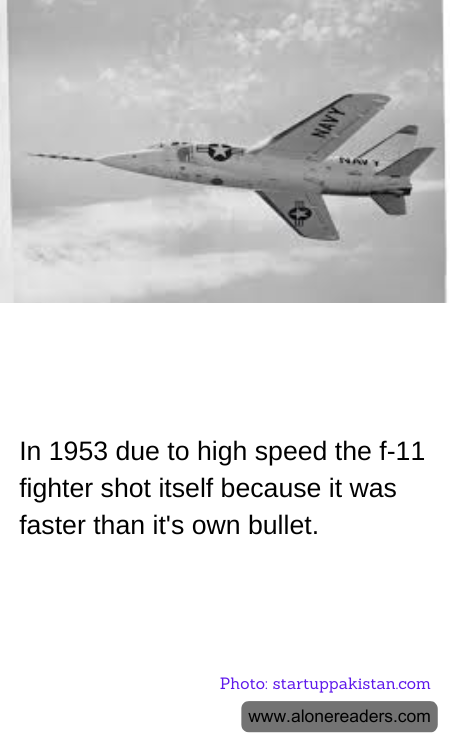
In a rather bewildering incident during a test flight in 1953, a U.S. Navy Grumman F11F Tiger managed to shoot itself down, illustrating an unusual hazard of high-speed jet aviation. On September 21, 1953, test pilot Tom Attridge inadvertently became part of aviation lore due to this peculiar event. Attridge was conducting a test flight for Grumman Aircraft Corporation, focusing on the F11F Tiger's gunnery system.
Flying over the Atlantic Ocean, Attridge fired a burst from the aircraft's four 20mm cannons at a downward angle. Post firing, he continued to accelerate into a shallow dive to follow the trajectory of his shells. The unexpected happened as he was chasing his own bullets: the aircraft caught up with and flew through the rounds he had just discharged. High-speed jet flight had introduced a new, bizarre risk—the possibility of an aircraft ousting its own ammunition.
The bullets struck and damaged the Tiger’s nose and one of its engines. The inflicted damage deteriorated the engine's performance, ultimately leading to its failure. Struggling with a compromised aircraft, Attridge attempted a return to base. Unfortunately, he crash-landed in a forest near the testing range, seriously injuring himself, but luckily, he survived.
This strange incident underscored the complexities and unexpected challenges of jet aviation, particularly in relation to the interaction between aircraft speeds and projectile velocities. Engineers learned from this mishap, incorporating the insights gained into future designs and pilot training programs. It emphasized the necessity for considerable separation between a jet and its ammunition after firing—an obvious yet overlooked facet of aerial armament tactics at that time.
While peculiar and unfortunate, the incident involving the Tiger serves as a testament to the rapid advancement of aerospace technology and its sometimes unforeseen consequences. It represents one of those rare instances in military aviation where the aircraft's capability of high-speed flight turned into an inadvertent self-threat. The event has since been a point of analysis and curiosity in both aviation history and technology evolution, highlighting that progress often comes with unexpected lessons.
