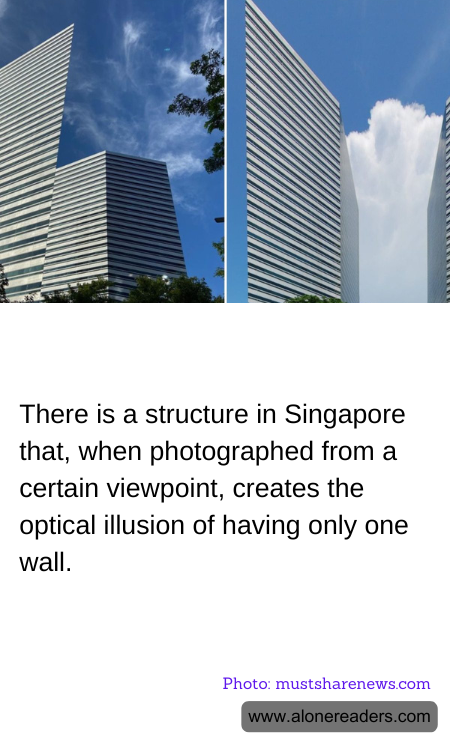
In the bustling city-state of Singapore, a marvel of architectural design has captured the attention of both locals and tourists alike. This unique structure, nestled among the innovative skyline, holds a captivating secret: when viewed from a specific angle, it appears as if it has only one wall. This optical illusion is a testament to the creative ingenuity of its designers and engineers.
Located in the heart of Singapore, the building is a blend of modern engineering and artistic design. To the casual observer, it presents itself as a typical contemporary structure. However, as one moves to the designated viewpoint, the illusion unfolds, and the building mysteriously flattens into what seems to be a two-dimensional façade. This effect is achieved through a meticulous arrangement of structural elements and a careful consideration of perspective.
The illusion is further enhanced by Singapore’s vibrant atmosphere and the play of light throughout the day, which casts varying shadows that add to the visual experience. Photographers and curious visitors often flock to this spot, especially during the golden hours of dawn or dusk, to capture the perfect shot of the architectural illusion. The one-wall appearance makes it a popular backdrop for artistic photography and has been featured on numerous social platforms, drawing even more visitors intrigued by its visual trickery.
Beyond its spectacular visual trick, the structure serves practical purposes and embodies the principles of sustainable architecture that Singapore is known for. It incorporates features such as energy-efficient systems and environmentally friendly materials, reflecting the city-state's commitment to sustainability.
This visually stunning and environmentally conscious structure is more than just an architectural oddity; it symbolizes the innovative spirit and forward-thinking approach of Singapore. It not only enhances the urban landscape but also encourages a deeper appreciation of the possibilities within architectural design. The one-wall illusion serves not only as a reminder of the creative potential of modern architecture but also as an invitation to look beyond the surface and explore deeper perspectives.
