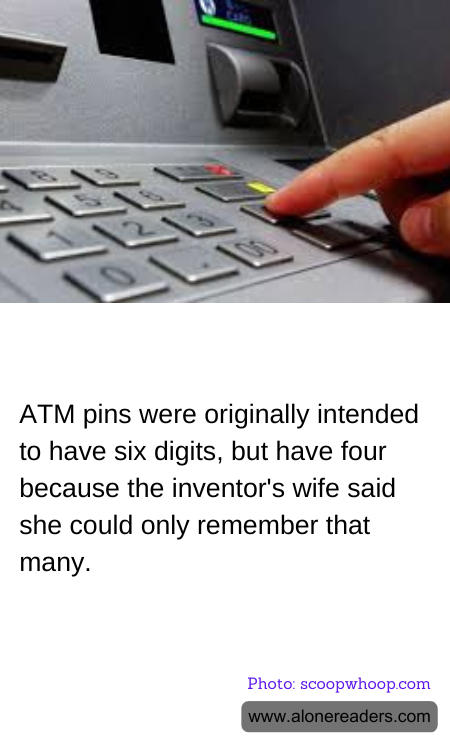
When it comes to the balance between security and memorability in technology, an interesting anecdote surrounds the creation of the Automated Teller Machine (ATM) PIN code. The invention of the ATM in the late 1960s transformed banking, offering round-the-clock service for cash withdrawals and account management. With this innovation came the need for a secure method of user authentication, leading to the development of the Personal Identification Number (PIN).
The ATM and its PIN system are credited to John Shepherd-Barron, who is often recognized as the inventor of the first operational ATM. Shepherd-Barron originally conceived the PIN code to be six digits long, believing that a longer code would offer more security. However, the final digit length was influenced by a more personal factor: his wife’s memory capacity. According to Shepherd-Barron, his wife, Caroline, confessed that she could only reliably remember up to four digits. Believing that ease of use was critical for wide adoption, he adjusted the standard ATM PIN length to four digits.
This decision exemplifies a critical principle in design — usability often trumps technical perfection. While a six-digit PIN would theoretically offer a higher level of security due to the increased number of possible combinations, the four-digit code struck a balance, offering sufficient security while remaining user-friendly. It is a classic instance of the real-world application of technology needing to consider human factors as much as technical specifications.
Today, four-digit PIN codes remain standard for ATM transactions in many parts of the world, although some regions have adopted longer PINs for increased security. This story serves as a reminder of the importance of considering end-user capabilities and limitations in the design of technology, ensuring that it is accessible and useful to those it aims to serve. The tale of the PIN's creation is not only about technological innovation but also about inclusivity and adaptability in the face of everyday human factors.
