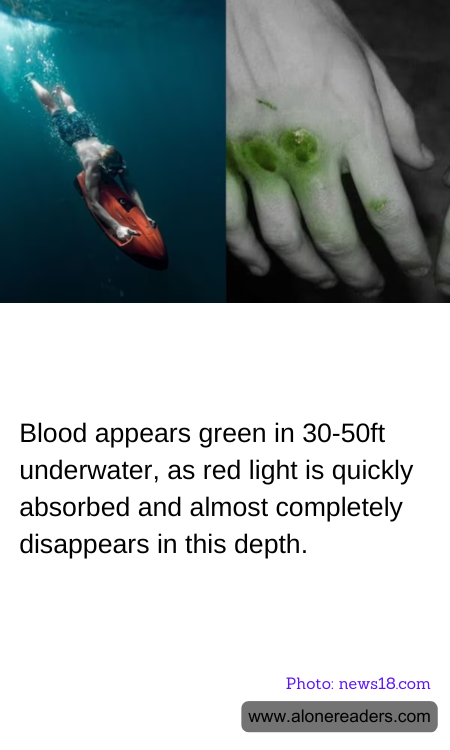
Underwater, the colors we perceive change dramatically due to the absorption and scattering of light by water. When light penetrates water, it is absorbed and scattered by the water molecules and any suspended particles. Different wavelengths (colors) of light are absorbed at different rates. Red light, which has the longest wavelength of all visible colors, is absorbed quickly and almost completely disappears as you go deeper into the ocean. This happens at a relatively shallow depth, usually around 30-50 feet underwater.
At these depths, because red light is absorbed, it does not reach our eyes. This affects how we see other colors. Blood, which is naturally red due to the hemoglobin in our red blood cells, will appear greenish. This is because the green light can still reach that depth and reflect off of objects, whereas the red light cannot. So, the red pigments in blood no longer appear red, and the absence of red light makes the blood seem to have a greenish hue. This intriguing color shift occurs with other red objects as well in the same depth range.
Understanding this phenomenon is crucial for activities like underwater photography and diving. Photographers use special filters and artificial lighting to restore the natural colors that disappear under water. This knowledge not only helps in visualizing the underwater environment more accurately but also contributes to the safety and enjoyment of divers, helping them make sense of their vivid surroundings. Moreover, scientists studying marine life and underwater ecosystems rely on this understanding to interpret observations and data correctly, ensuring they take into account the color distortions caused by water depth.
