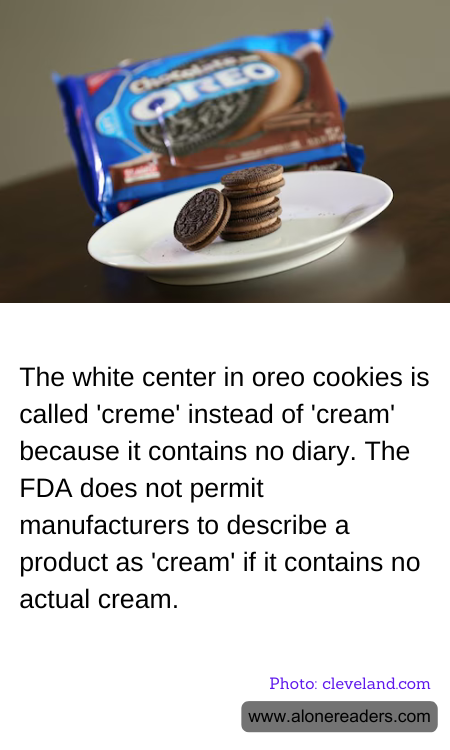
The iconic Oreo cookie, known for its delicious duo of chocolate wafers and a creamy white center, calls the white filling ‘creme’ rather than ‘cream’—a distinction that is not just creative, but also regulatory. The use of 'creme' instead of 'cream' is not about branding alone, but adherence to strict food labeling laws. According to the Food and Drug Administration (FDA), which regulates food labeling in the United States, the term 'cream' can only be used to describe products that are dairy-based. Cream is traditionally a dairy product, made by separating the fat from the liquid components of milk or cream.
Oreo’s filling, however, contains no dairy products; it is instead made from a mix of ingredients like sugar, vegetable oils, and various artificial flavors, which create a non-dairy imitation of cream. By calling it 'creme', Oreo ensures compliance with FDA regulations while also giving the product a unique identity. This distinction is important, not just for regulatory compliance, but also for consumer awareness. People who are vegan or lactose intolerant might choose Oreos based on the understanding that the 'creme' does not contain dairy.
Moreover, the choice of wording helps Oreo stand out in the crowded snack market. The spelling differentiates it from other products and enhances brand uniqueness, which can be a powerful marketing tool. Defining product characteristics through unique terminology can impact customer thoughts, feelings, and associations with the brand. In the case of Oreo, 'creme' has become a signature aspect of its identity, further solidified by advertising and consumer experience.
Lastly, it’s fascinating how regulatory influences can affect even the smallest details like the naming of cookie fillings. It serves as a reminder of the careful planning and compliance with regulations that go into the development and marketing of food products. Such standards ensure that food labels accurately inform consumers about what they are eating, adhering to laws designed to protect consumer interests by preventing misinformation and ensuring safety.
