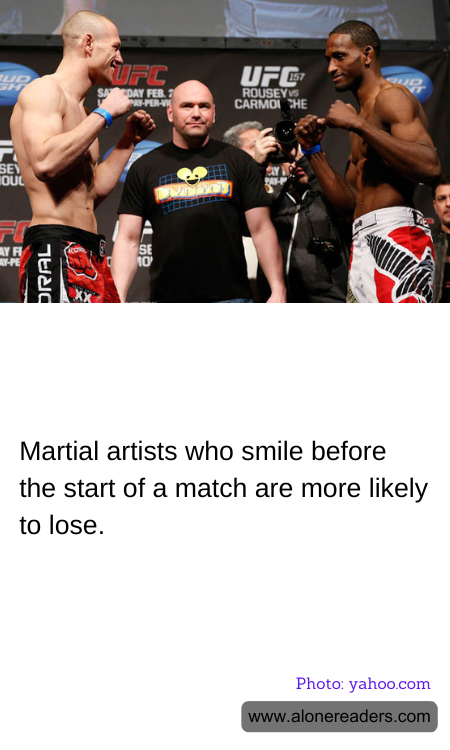
Martial arts, a realm where discipline, strength, and strategy converge, has intrigued enthusiasts and scholars alike not just for the physical prowess displayed but also for the psychological tactics employed by fighters. Among these, the behavior of smiling before a match has sparked interest due to observed correlations with match outcomes. Conventional wisdom might suggest that smiling denotes confidence and psychological ease, potentially intimidating an opponent. However, research and observations suggest otherwise.
Studies in sports psychology suggest that smiles are typically interpreted as a signal of non-aggression and friendliness, emotions that are perhaps less useful in a competitive martial arts context. When a martial artist smiles before a fight, it may inadvertently signal to their opponent, and even the audience, that they are less prepared, confident, or aggressive. This perception can play a crucial role in combat sports where psychological warfare is as integral as physical combat.
Moreover, smiling may also be a nonverbal cue that the fighter is experiencing nerves and is using the smile to mask anxiety or fear. This unintended signal can be picked up by their opponent, who might perceive it as an advantage, thereby gaining a psychological upper hand. Opponents might interpret a smile as a lapse in a fighter’s mental armor, using it to bolster their own confidence and aggression.
Observational data from various martial arts competitions, including mixed martial arts (MMA) and traditional karate tournaments, suggest a pattern where fighters who display smiles before the commencement of a bout are statistically more likely to lose compared to those who maintain a neutral or aggressive demeanor. This could be connected to the decreased perceived threat level of a smiling fighter, possibly making them an easier target in the eyes of their opponent.
However, it is essential to consider that the correlation between smiling and losing does not necessarily imply causation. Various factors can influence a match's outcome, and personal attributes such as resilience, skill level, and physical condition are certainly more predictive of success. Moreover, individual differences mean that what might be a disadvantage for one athlete could be a neutral or even positive factor for another, depending on their psychological makeup and the interpretation of their opponent.
In conclusion, while the act of smiling before a martial arts match can be interpreted in multiple ways, evidence leans towards it potentially being a disadvantage due to the psychological messages it sends. This insight can significantly impact training and preparation in martial arts sports, suggesting a focus not just on physical readiness but also on mastering the strategic use of body language and facial expressions to convey the right signals before and during combat.
