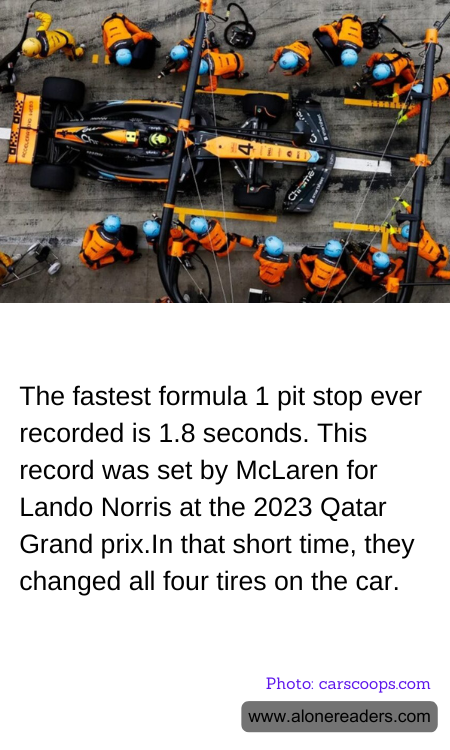
In the high-speed world of Formula 1 racing, where every millisecond can be the difference between victory and defeat, pit stops are a critical element of the race strategy. Achieving a fast and flawless pit stop is a testament to the skill, precision, and efficiency of a racing team. A remarkable example of this occurred at the 2023 Qatar Grand Prix, where the McLaren team set a new world record for the fastest pit stop ever recorded in Formula 1 history.
During this historic event, the crew serviced Lando Norris’s car with astounding speed, changing all four tires in a breathtaking 1.8 seconds. This incredible feat not only demonstrates the peak efficiency achievable in modern motorsports but also highlights the evolution of pit stop practices in Formula 1 racing.
Pit stops have been an essential aspect of Formula 1 races since the inception of the sport. Over the decades, teams have continually refined their techniques and equipment to shave off precious seconds. From the early days of Formula 1, when pit stops could take over a minute, the introduction of technological advancements and rigorous training protocols has brought this time down significantly.
The record-breaking pit stop by McLaren at the Qatar Grand Prix exemplifies the culmination of years of technological innovation and team coordination. It involves not just the visible crew members who change the tires, but also the strategists and technicians who monitor every aspect of the race and plan the timing of the stop to precision. Achieving a pit stop under two seconds is a complex ballet of human and machine, requiring each team member to perform their task perfectly and in perfect sync.
This record is not just a milestone for McLaren but also sets a new standard in Formula 1, pushing other teams to optimize their pit strategies and training further. It underscores the relentless pursuit of efficiency and speed in Formula 1 and how critical teamwork and precision are in achieving record-breaking performances. As teams continue to innovate and refine their techniques, the boundaries of what is considered possible in pit stops will likely be pushed even further, continuing to enhance the excitement and competitiveness of Formula 1.
