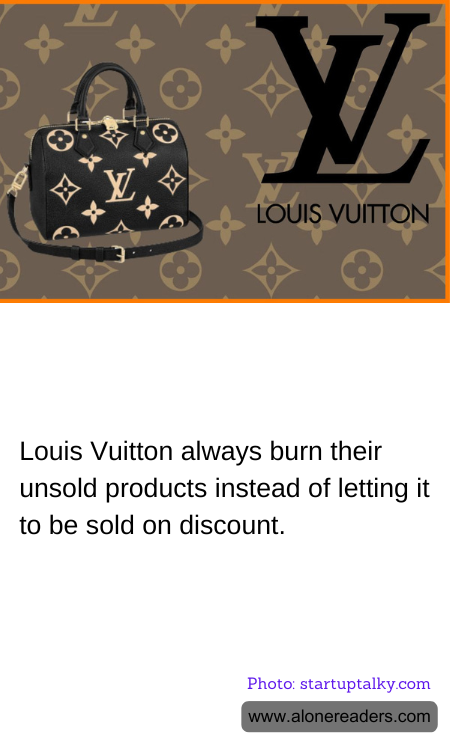
Louis Vuitton, a symbol of luxury and exclusivity, has been at the center of debates concerning their handling of unsold products. Unlike typical retail practices where unsold items might go on discount, Louis Vuitton maintains its brand integrity and value by avoiding sales or outlets for leftover merchandise. To preserve its exclusivity and prevent their products from being sold on the secondary market at lower prices, Louis Vuitton has been reported to destroy unsold goods.
This practice adheres to the brand's strategy of creating a perception of scarcity and value, ensuring that their products are perceived as timeless investments rather than mere commodities subject to market fluctuations. This approach also protects the brand's image and its market, keeping it distinctly separate from mass market brands and discount retailers, which can devalue luxury products through ubiquitous availability.
The destruction of unsold luxury goods is not unique to Louis Vuitton. Other high-end brands have been known to employ similar practices as a measure to control supply and maintain high pricing structures. However, this practice has drawn criticism from environmentalists and consumers alike who are concerned about the wastefulness and environmental impact of such actions. In response to this criticism, some luxury brands are exploring more sustainable options, such as recycling and repurposing unsold items.
In the broader context, these practices by Louis Vuitton and similar companies stimulate a critical discussion about sustainability in the fashion industry. The challenges of balancing exclusivity with environmental responsibility are considerable. Consumers are increasingly demanding sustainability as a core element of the luxury experience, not just quality and exclusivity. In response, some brands are beginning to adopt more transparent and environmentally friendly practices, signaling potential shifts in how the luxury fashion industry might address unsold stock in the future.
For Louis Vuitton, evolving consumer expectations present an opportunity to lead by example through innovation in sustainable luxury practices while maintaining the brand’s exclusive allure. How the company and others in the luxury market will continue to adapt to these pressures will likely shape the industry in significant ways.
