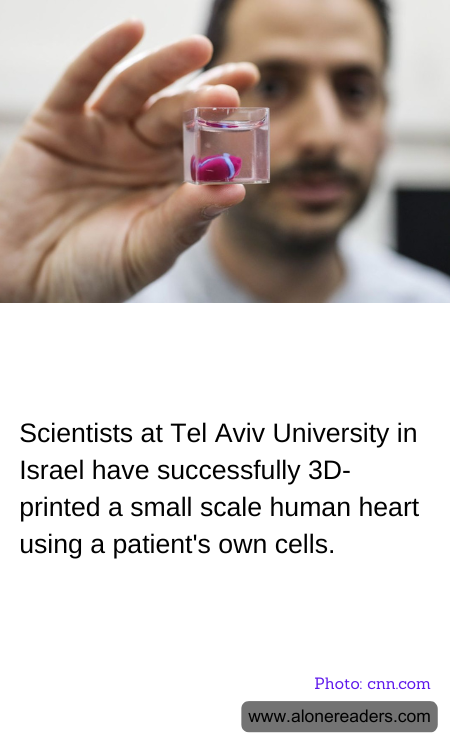
In a groundbreaking achievement, scientists from Tel Aviv University in Israel have successfully 3D-printed a prototype of a small-scale human heart using a patient's own biological materials. This pioneering research marks a significant step forward in the field of regenerative medicine, potentially revolutionizing the way heart diseases and disorders are treated in the future.
The process involves using a patient’s own cells, which significantly reduces the risk of implant rejection. These cells are first extracted and reprogrammed to become pluripotent stem cells, capable of developing into any type of cell in the human body. These stem cells are then differentiated into cardiac cells, which are used along with a customized hydrogel made from a patient's own fatty tissues as the "bioink." This bioink is loaded into a sophisticated 3D printer, meticulously designed to lay down layers of cells in precise configurations that mirror the complex structure of a human heart.
While the printed heart is currently the size of a rabbit’s, it includes all primary structures, including chambers, vents, and vascularization, though it is not yet able to pump blood. The researchers' next steps involve maturing these hearts in the lab and teaching them to behave like human hearts. This includes electrical stimulation and extensive conditioning to enable coordinated contraction, which is fundamental for the pumping function.
The implications of this technology are profound. In the future, it could lead to personalized heart transplants, eliminating long waiting lists for donor hearts and reducing transplant rejection rates. Furthermore, this technology could be pivotal for testing medications or understanding heart diseases, as customized, patient-specific heart models could be developed to better predict the response to various treatments.
This development is not just a leap forward for those suffering from cardiac conditions but also represents a paradigm shift in medical research methodologies. By harnessing the power of bioengineering, researchers are now on a path that could lead to the replication of complex organ structures, potentially marking the beginning of an era where organ shortages are no longer a concern, dramatically improving outcomes in transplant medicine.
