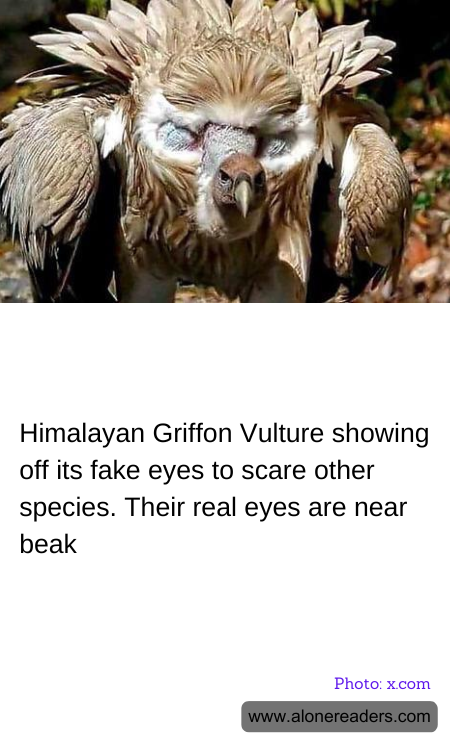
The Himalayan Griffon Vulture, an imposing figure in the skies of Asia, has evolved a unique method of self-defense and species interaction. This large raptor, known scientifically as Gyps himalayensis, exhibits a fascinating feature: what appear to be a set of intimidating eyes on its plumage. These deceptive markings are located at strategic points on their body, particularly around the neck region. In reality, their actual eyes are positioned on their head, close to the beak, much like other bird species.
This type of mimicry is not just a curious anomaly but a vital survival strategy. In the wild, the survival of a species often hinges on its ability to deter predators and avoid conflict. The Himalayan Griffon Vulture's fake eyes play a significant role in this. When a predator or a competing species confronts the vulture, these false eyes can create the illusion of a larger, more formidable creature. Often, just the appearance of these eyes can be enough to give potential threats a moment’s pause, allowing the vulture enough time to escape or avoid a potentially harmful interaction.
Additionally, these fake eyes contribute to the vulture's social behavior and interactions with other vultures. During communal roosting or feeding, where aggression can sometimes surface, the presence of the extra eyes can serve as a deterrent against attacks from other vultures, promoting a more peaceful coexistence.
The Himalayan Griffon Vulture, with its majestic wingspan and robust build, is an essential part of the mountainous ecosystems of Asia. It plays a critical role in the environment as a scavenger, cleaning up the dead animal matter and thus preventing the spread of disease. The preservation of this species is crucial not only for ecological balance but also for maintaining the biological diversity of the region.
Conservation efforts are therefore immensely important, especially considering the threats these birds face from habitat loss, poisoning, and a diminishing food supply. Understanding and publicizing fascinating aspects of their behavior and anatomy, like their deceptive eye pattern, are part of raising awareness and interest in the conservation of these magnificent birds. This heightened awareness could encourage more robust and effective conservation strategies, ensuring that the Himalayan Griffon Vulture continues to soar through the Asian skies for generations to come.
